
The Vagus Nerve: Your Body's Secret Weapon
Running from your brainstem to your gut, the vagus nerve is the longest cranial nerve in your body—and possibly the most important one you've never heard of. Understanding and strengthening your vagal tone could be the key to better stress management, improved health, and enhanced performance.
What Is the Vagus Nerve?
The vagus nerve (from Latin "vagus" meaning "wandering") is the main component of the parasympathetic nervous system. It connects your brain to:
- Heart
- Lungs
- Digestive tract
- Liver
- Spleen
- Kidneys
It's a two-way communication highway: 80% of its fibers carry information FROM the body TO the brain, while 20% carry commands FROM the brain TO the body.
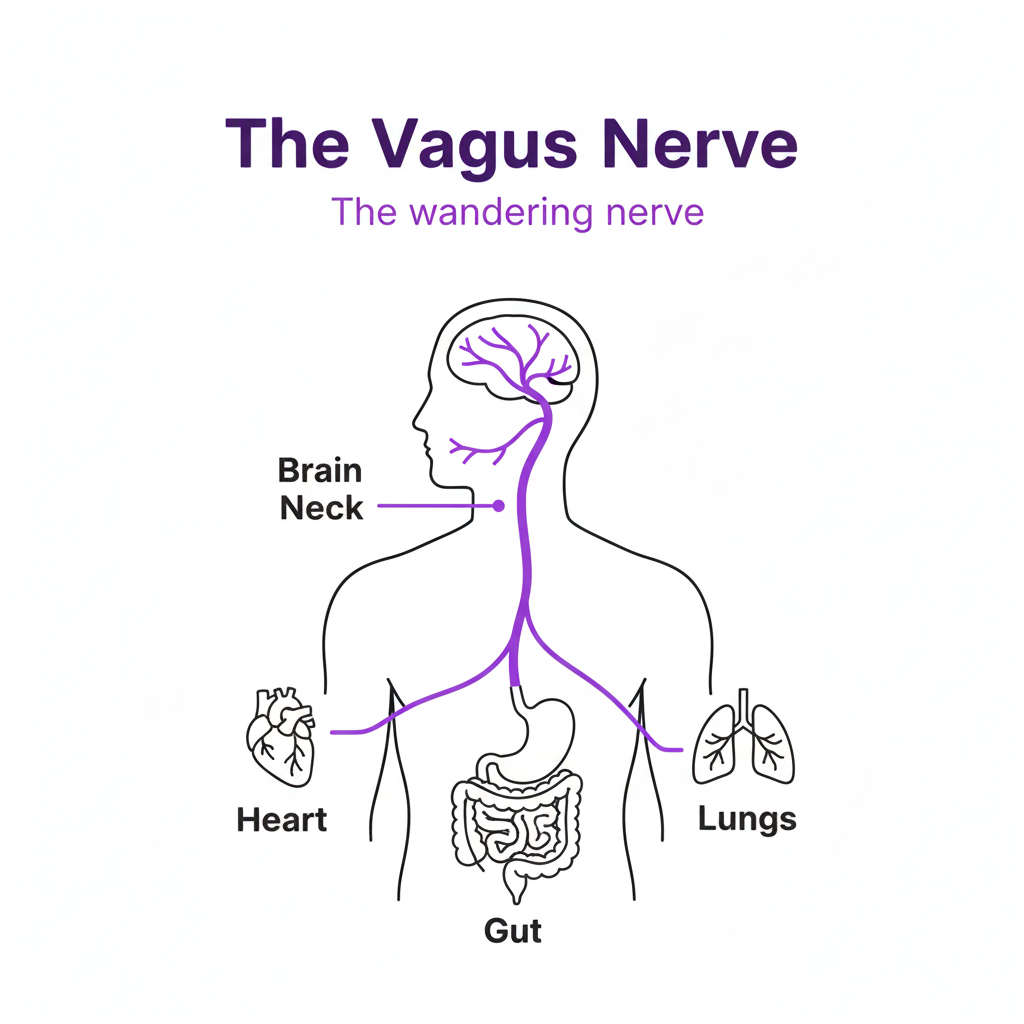 Vagus nerve anatomy diagram showing the path from brain through neck to heart, lungs, and gut
Understanding Vagal Tone
Vagal tone refers to the activity level of the vagus nerve. Think of it as the "fitness" of your parasympathetic system.
High vagal tone indicates:
- Strong parasympathetic response
- Quick recovery from stress
- Better emotional regulation
- Efficient digestion
- Healthy inflammation response
Low vagal tone is associated with:
- Chronic stress
- Anxiety and depression
- Poor digestion
- Inflammation
- Cardiovascular issues
The Vagus Nerve and HRV
Heart Rate Variability (HRV) is the primary way we measure vagal tone non-invasively. When vagal tone is high:
- Heart rate slows during exhale (respiratory sinus arrhythmia)
- HRV increases
- The body can shift quickly between states
This is why HRV tracking has become so popular among biohackers—it's essentially a window into your vagal function.
Polyvagal Theory: The Three States
Dr. Stephen Porges' Polyvagal Theory expanded our understanding of the vagus nerve, identifying three distinct states:
1. Ventral Vagal (Social Engagement)
- Feeling safe and connected
- Optimal for learning, creativity, connection
- Associated with calm, focused states
- Face and voice are expressive
2. Sympathetic (Fight or Flight)
- Mobilization for action
- Heart rate increases
- Digestion slows
- Heightened alertness
3. Dorsal Vagal (Shutdown)
- Immobilization response
- Dissociation, numbness
- Conservation of energy
- Last-resort survival mechanism
The goal is to spend most time in the ventral vagal state and have flexibility to move between states as needed.
How Breathwork Strengthens Vagal Tone
Breathing is the most direct way to influence the vagus nerve because:
- The vagus nerve innervates the diaphragm
- Slow exhales activate vagal braking of the heart
- Deep breathing stimulates baroreceptors
The Exhale Is Key
When you exhale, especially slowly:
- The vagus nerve sends signals to slow the heart
- Parasympathetic activity increases
- The body shifts toward rest-and-digest
This is why so many effective breathwork techniques emphasize longer exhales.
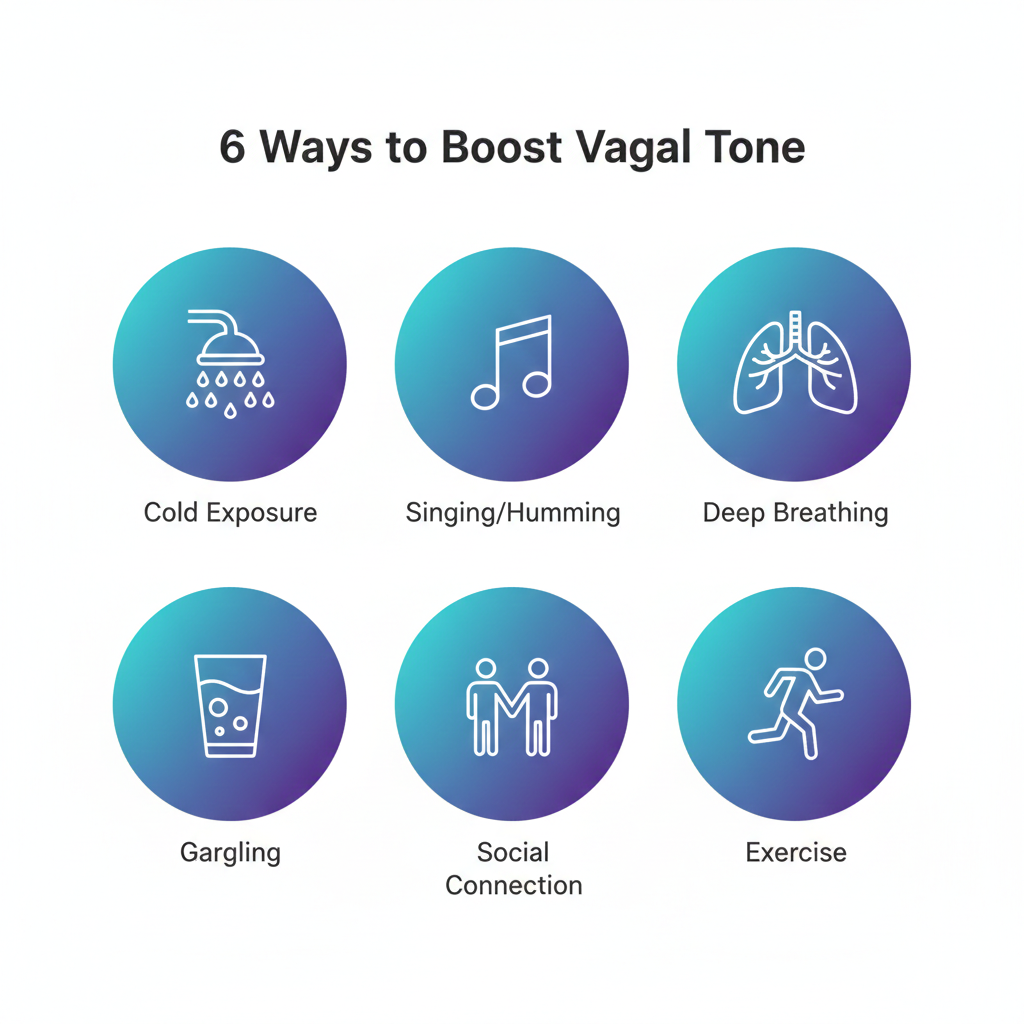 Six ways to boost vagal tone: cold exposure, singing/humming, deep breathing, gargling, social connection, exercise
10 Ways to Strengthen Your Vagal Tone
1. Slow, Deep Breathing
The simplest and most effective method:
- Inhale for 4-5 seconds
- Exhale for 6-8 seconds
- Practice 5-10 minutes daily
2. Cold Exposure
Cold activates the vagus nerve:
- Cold showers (30-60 seconds)
- Cold water face immersion
- Cold pack on neck/chest
3. Humming, Chanting, or Singing
The vagus nerve connects to the vocal cords:
- Humming "om" or other sounds
- Singing loudly
- Gargling
4. Meditation
Regular meditation practice:
- Loving-kindness meditation especially effective
- Body scan meditation
- Mindfulness practices
5. Exercise
Particularly effective:
- Yoga (combines breath, movement, meditation)
- Moderate aerobic exercise
- Swimming
6. Social Connection
The vagus nerve is central to social engagement:
- Quality time with loved ones
- Laughter
- Eye contact and physical touch
7. Massage
Stimulates vagal activity:
- Foot massage (vagal reflexology points)
- Carotid sinus massage (with caution)
- General relaxation massage
8. Probiotics and Gut Health
The gut-brain axis runs through the vagus:
- Fermented foods
- Prebiotic fiber
- Diverse diet
9. Omega-3 Fatty Acids
Support vagal function:
- Fatty fish (salmon, mackerel)
- Fish oil supplements
- Algae-based omega-3s
10. Sleep
Quality sleep restores vagal tone:
- Consistent sleep schedule
- Cool, dark room
- No screens before bed
Signs of Improved Vagal Tone
As you strengthen your vagus nerve, you may notice:
- Better stress recovery - Bouncing back faster from challenges
- Improved digestion - Less bloating, better regularity
- Enhanced mood - More emotional stability
- Better sleep - Falling asleep faster, deeper sleep
- Lower resting heart rate - Sign of efficient cardiovascular system
- Higher HRV - Measurable improvement in variability
The Breathwork-Vagal Connection
Specific techniques that powerfully stimulate the vagus:
Coherence Breathing
- 5 seconds in, 5 seconds out
- 6 breaths per minute
- Maximizes respiratory sinus arrhythmia
Extended Exhale Breathing
- Inhale 4 seconds
- Exhale 8 seconds
- Strong vagal activation
4-7-8 Breathing
- Inhale 4 seconds
- Hold 7 seconds
- Exhale 8 seconds
- Excellent for sleep and relaxation
Physiological Sigh
- Double inhale through nose
- Long exhale through mouth
- Rapid stress reduction
Building a Vagal Toning Practice
Morning Routine (5 minutes)
- 3 physiological sighs upon waking
- 2 minutes of coherence breathing (5-5)
- 30 seconds of humming
Throughout the Day
- Notice stress and respond with extended exhales
- Take "vagal breaks" - 1 minute of slow breathing
- Prioritize social connection
Evening Routine (5-10 minutes)
- 5 minutes of 4-7-8 breathing
- Cold water on face (30 seconds)
- Gratitude practice (activates positive vagal states)
Measuring Your Progress
Track these indicators:
- HRV - Primary measure of vagal tone
- Resting heart rate - Should decrease over time
- Recovery heart rate - How fast HR drops after exercise
- Subjective wellbeing - Stress levels, mood, sleep quality
The Bigger Picture
Vagal tone isn't just about relaxation—it's about resilience. A strong vagus nerve allows you to:
- Face challenges without being overwhelmed
- Recover quickly from stressful events
- Maintain health under pressure
- Connect deeply with others
- Perform at your best when it matters
This is why special forces operators, elite athletes, and high performers increasingly focus on vagal tone training alongside physical preparation.
Key Takeaways
- The vagus nerve is the main highway of your parasympathetic system
- Vagal tone reflects how efficiently you can recover from stress
- Breathwork is the most direct way to strengthen vagal function
- Extended exhales are particularly effective
- Consistent practice creates lasting improvements
Want to track how your breathwork practice affects your vagal tone? Safe-Flow shows you HRV trends over time, helping you see the real impact of your practice on your nervous system.
Join the Beta
Be among the first to experience Safe-Flow. Get early access + exclusive breathing guides.