
Heart Rate Variability: Your Body's Hidden Performance Metric
While most people focus on resting heart rate, elite athletes and biohackers have discovered a far more powerful metric: Heart Rate Variability (HRV). This single number can tell you more about your readiness, recovery, and overall health than almost any other measurement.
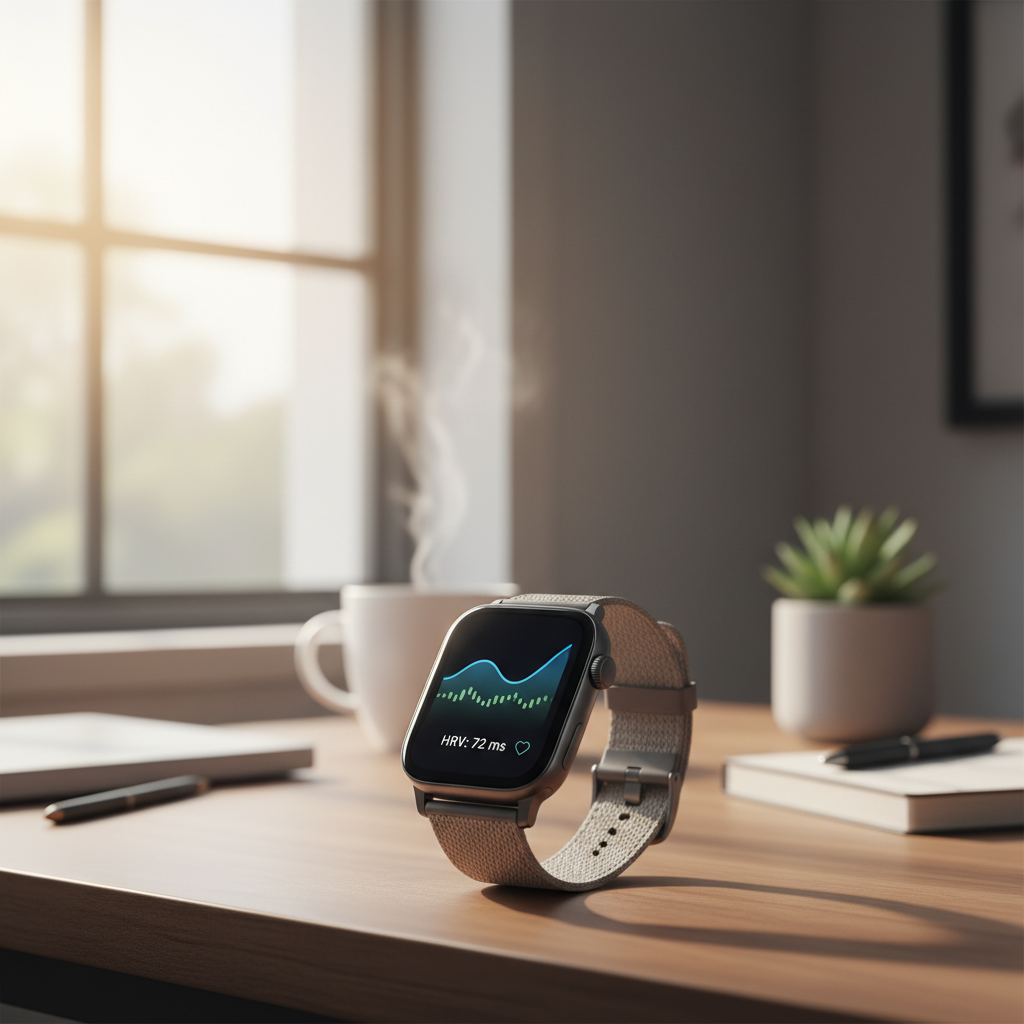 HRV measures the millisecond variations between heartbeats—counter-intuitively, higher variability indicates better health. Benchmarks: below 20ms is low, 50-100ms is good, above 100ms is excellent (common in endurance athletes)
What Is HRV?
Heart Rate Variability measures the variation in time between consecutive heartbeats. Contrary to what you might think, a healthy heart doesn't beat like a metronome—it has natural variations.
For example, if your heart rate is 60 BPM, the intervals between beats aren't exactly 1 second each. They might be:
- Beat 1 to 2: 0.98 seconds
- Beat 2 to 3: 1.03 seconds
- Beat 3 to 4: 0.97 seconds
This variation is HRV, and higher variability is generally better.
Why Does HRV Matter?
The Autonomic Nervous System Connection
Your autonomic nervous system (ANS) has two branches:
- Sympathetic - Fight or flight (accelerator)
- Parasympathetic - Rest and digest (brake)
HRV reflects the balance between these systems. Higher HRV indicates:
- Better parasympathetic tone
- Greater adaptability to stress
- More efficient recovery
- Overall better health
What HRV Tells You
| High HRV | Low HRV |
|---|---|
| Well-recovered | Fatigued |
| Low stress | High stress |
| Ready for intensity | Need rest |
| Good sleep quality | Poor sleep |
| Healthy lifestyle | Potential issues |
How to Measure HRV
Devices That Track HRV
Chest Straps (Most Accurate)
- Polar H10
- Garmin HRM-Pro
- Wahoo TICKR
Wearables
- Oura Ring
- WHOOP
- Garmin watches
- Apple Watch (with apps)
Apps
- Elite HRV
- HRV4Training
- Welltory
Best Practices for Measurement
- Measure first thing in the morning - Before coffee, before getting up
- Same position each time - Lying down or seated
- Same duration - At least 1 minute, ideally 2-5 minutes
- Consistent timing - Same time each day
- Track trends, not single readings - Weekly averages matter more
Understanding Your Numbers
Common HRV Metrics
RMSSD (Root Mean Square of Successive Differences)
- Most common metric
- Measured in milliseconds
- Higher = better parasympathetic activity
SDNN (Standard Deviation of NN intervals)
- Overall HRV
- Useful for longer recordings
HRV Score (Normalized)
- Many devices convert to 0-100 scale
- Easier to understand but less precise
What's a "Good" HRV?
HRV is highly individual. Factors affecting baseline:
- Age - Decreases with age
- Fitness level - Athletes typically have higher HRV
- Genetics - Some people naturally have higher/lower
- Gender - Women often have slightly lower HRV
Rough benchmarks (RMSSD for adults):
- Below 20ms: Low (may indicate chronic stress)
- 20-50ms: Average
- 50-100ms: Good
- Above 100ms: Excellent (common in endurance athletes)
Important: Compare yourself to yourself, not others.
 Breathing at 6 breaths per minute (5s in, 5s out) maximizes HRV through respiratory sinus arrhythmia—your heart rate naturally syncs with your breath, and this coherence state is measurable within minutes
How Breathwork Improves HRV
This is where it gets exciting. Breathwork is one of the most effective ways to improve HRV.
Immediate Effects
During slow, controlled breathing:
- HRV increases within minutes
- Parasympathetic activation occurs
- Stress hormones decrease
Long-Term Adaptations
Regular breathwork practice leads to:
- Higher baseline HRV
- Better stress resilience
- Faster recovery from intense training
- Improved sleep quality
The Optimal Breathing Rate
Research shows that breathing at approximately 6 breaths per minute (5 seconds inhale, 5 seconds exhale) maximizes HRV through respiratory sinus arrhythmia (RSA).
This is why coherence breathing and similar protocols work so well.
 The HRV readiness model: above baseline (green) = push harder, at baseline (yellow) = follow the plan, below baseline (red) = prioritize recovery. Track your 7-day rolling average and adjust training accordingly
Using HRV to Guide Training
The Readiness Model
Many athletes use HRV to determine daily training intensity:
HRV Above Baseline (Green Zone)
- Body is well-recovered
- Good day for high-intensity training
- Can push harder than planned
HRV At Baseline (Yellow Zone)
- Normal recovery status
- Stick to planned training
- Listen to body during workout
HRV Below Baseline (Red Zone)
- Body is stressed or under-recovered
- Consider lighter training or rest
- Focus on recovery activities
Practical Implementation
- Track HRV daily for 2-4 weeks to establish baseline
- Calculate your 7-day rolling average
- Compare daily readings to this average
- Adjust training based on trends, not single readings
Factors That Lower HRV
Understanding what hurts HRV helps you optimize:
- Poor sleep - Single biggest factor
- Alcohol - Even 1-2 drinks impacts HRV
- Overtraining - Too much intensity without recovery
- Chronic stress - Work, relationships, finances
- Illness - HRV drops before symptoms appear
- Dehydration - Often overlooked
- Late meals - Digestion during sleep hurts HRV
Factors That Raise HRV
- Quality sleep - 7-9 hours in dark, cool room
- Regular breathwork - Even 5 minutes daily helps
- Aerobic exercise - Zone 2 training is HRV-friendly
- Cold exposure - After adaptation period
- Meditation - Similar mechanisms to breathwork
- Nature exposure - Forest bathing, outdoor time
- Social connection - Positive relationships boost HRV
HRV and Breathwork: A Practical Protocol
Morning HRV Check + Breathwork
- Wake up, don't check phone
- Measure HRV for 2-5 minutes
- Based on reading:
- High HRV: Energizing breathwork (Wim Hof, cyclic hyperventilation)
- Normal HRV: Balanced breathwork (box breathing)
- Low HRV: Calming breathwork (coherence, 4-7-8)
Evening HRV Optimization
Before bed:
- 5 minutes of slow breathing (5-5 or 4-7-8)
- This primes the parasympathetic system for sleep
- Better sleep = higher morning HRV
Common HRV Mistakes
- Obsessing over daily numbers - Trends matter more
- Comparing to others - Your baseline is unique
- Ignoring context - Travel, time zones, illness affect readings
- Measuring inconsistently - Same time, same position, always
- Not acting on data - Information without action is useless
The Future of HRV
HRV tracking is becoming increasingly sophisticated:
- Real-time HRV during activities
- Continuous overnight monitoring
- AI-powered recommendations
- Integration with other biomarkers
As wearables improve, HRV will become an even more valuable tool for optimizing health and performance.
Key Takeaways
- HRV measures the variation between heartbeats—higher is generally better
- It reflects autonomic nervous system balance and recovery status
- Breathwork is one of the most effective ways to improve HRV
- Use HRV trends (not single readings) to guide training and recovery
- Consistency in measurement is crucial for useful data
Ready to see how breathwork affects your HRV? Safe-Flow integrates with Garmin, Oura, Apple Health, and other wearables to show you exactly how your practice impacts your physiology over time.
Join the Beta
Be among the first to experience Safe-Flow. Get early access + exclusive breathing guides.