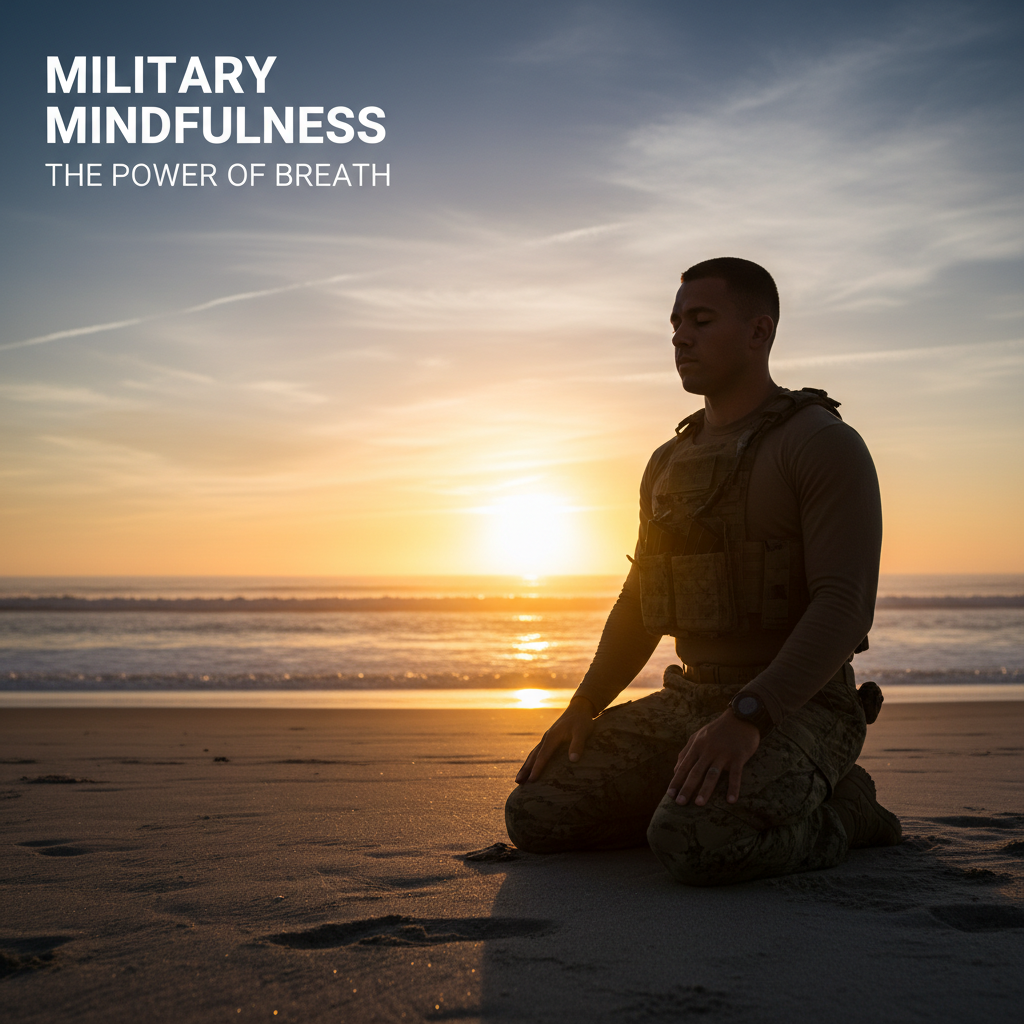
Box Breathing: A Simple Technique with Powerful Effects
Box breathing, also known as tactical breathing or 4-4-4-4 breathing, is one of the most accessible yet effective breathwork techniques available. Used by Navy SEALs, first responders, and athletes worldwide, this method can help you regain control in high-stress situations.
What Is Box Breathing?
The technique is beautifully simple:
- Inhale for 4 seconds
- Hold your breath for 4 seconds
- Exhale for 4 seconds
- Hold empty lungs for 4 seconds
- Repeat for 4-5 cycles or as needed
The name "box" comes from visualizing each phase as one side of a square—equal duration, balanced breathing.
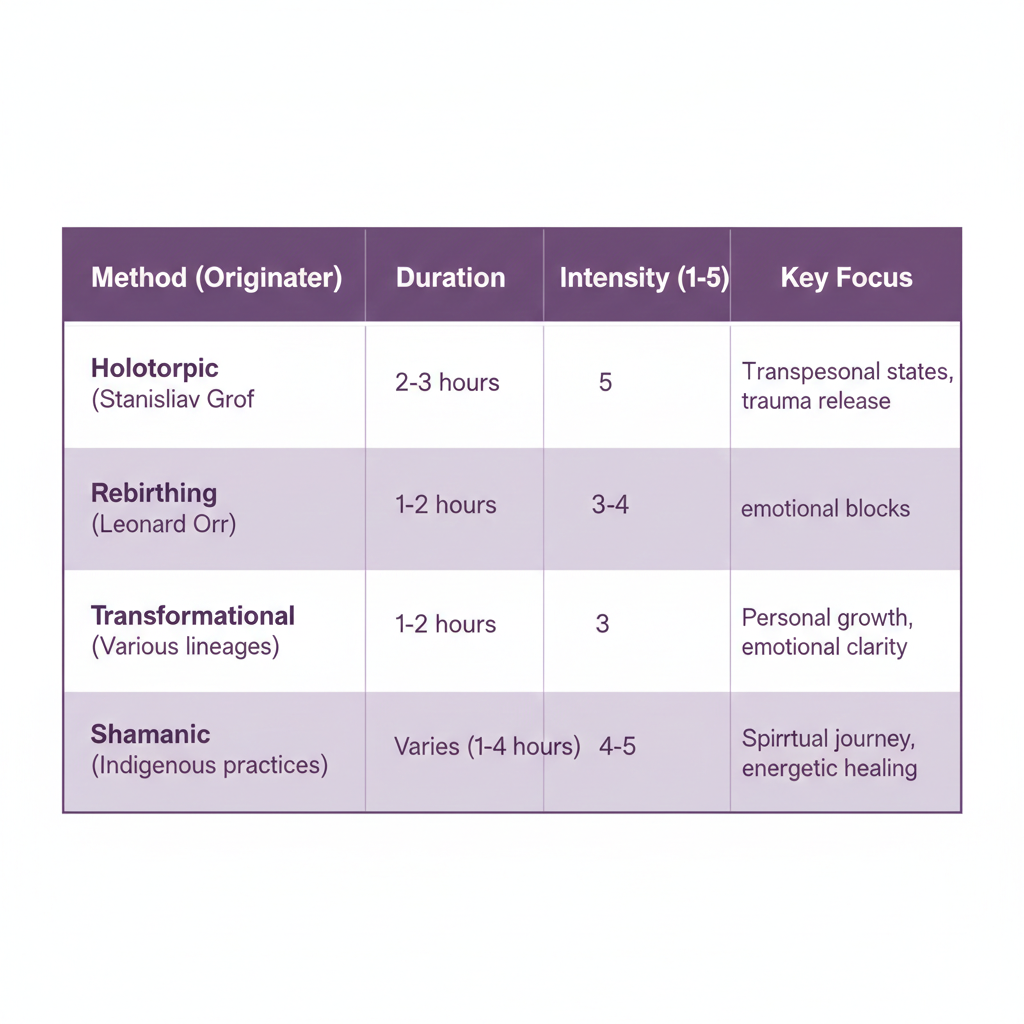 Box breathing diagram showing the 4-4-4-4 cycle: inhale 4 seconds, hold 4 seconds, exhale 4 seconds, hold 4 seconds
The Science Behind the Technique
Activating the Parasympathetic System
Box breathing works primarily by stimulating the vagus nerve and shifting your autonomic nervous system from sympathetic (fight-or-flight) to parasympathetic (rest-and-digest) dominance.
Key physiological effects include:
- Reduced cortisol - The stress hormone decreases within minutes
- Lower heart rate - Typically 5-15 BPM reduction
- Improved HRV - Heart rate variability increases, indicating better autonomic balance
- Enhanced focus - Prefrontal cortex function improves as stress decreases
The Role of CO2 Tolerance
Unlike rapid breathing techniques, box breathing deliberately introduces breath holds that slightly increase CO2 levels. This:
- Trains your body to tolerate higher CO2 without panicking
- Improves the efficiency of oxygen delivery to tissues (Bohr effect)
- Creates a calming sensation as chemoreceptors adapt
Why Navy SEALs Use It
Mark Divine, a former Navy SEAL commander and founder of SEALFIT, has been instrumental in bringing box breathing to civilian awareness. The military values this technique because:
- It works anywhere - No equipment, no special position required
- It's quick - Noticeable effects in 2-4 minutes
- It's reliable - Works even under extreme stress
- It's covert - Can be practiced without anyone noticing
"Box breathing is one of the most powerful tools I've ever encountered for controlling the mind and body under stress." — Mark Divine, former Navy SEAL Commander
Research Evidence
A 2017 study published in Frontiers in Psychology examined the effects of slow-paced breathing (similar to box breathing) on stress and cognition:
- Participants showed significant reductions in anxiety scores
- Reaction time and accuracy improved on cognitive tests
- Effects were measurable after just 5 minutes of practice
Another study in the International Journal of Psychophysiology found that controlled breathing at 6 breaths per minute (close to box breathing's pace) optimally stimulates the baroreflex, a key mechanism for blood pressure and heart rate regulation.
How to Practice Box Breathing
Getting Started
- Find a comfortable seated position
- Close your eyes or maintain a soft gaze
- Breathe through your nose if possible
- Keep your shoulders relaxed
The Basic Protocol
Start with this beginner-friendly version:
- Inhale: 4 seconds
- Hold: 4 seconds
- Exhale: 4 seconds
- Hold: 4 seconds
- Cycles: 4-6 rounds
Advanced Variations
As you become comfortable, you can:
- Extend to 5-5-5-5 or 6-6-6-6
- Add more cycles (up to 10-15 minutes)
- Practice during challenging situations
When to Use Box Breathing
Before High-Stakes Situations
- Important meetings or presentations
- Athletic competitions
- Difficult conversations
- Medical procedures
During Stressful Moments
- Feeling overwhelmed at work
- Traffic or travel stress
- Conflict situations
- Anxiety spikes
For Daily Wellness
- Morning routine
- Pre-sleep relaxation
- Midday reset
- Post-workout recovery
Common Mistakes to Avoid
- Forcing the breath - Keep it natural and comfortable
- Tensing the body - Relax shoulders, jaw, and hands
- Rushing - The slower, the better (within reason)
- Expecting immediate miracles - Benefits compound with practice
- Practicing in unsafe situations - Never while driving or in water
Box Breathing vs. Other Techniques
| Technique | Duration | Intensity | Best For |
|---|---|---|---|
| Box Breathing | 4-4-4-4 | Gentle | Stress, focus |
| Wim Hof | 30+ breaths | Intense | Energy, cold tolerance |
| 4-7-8 | 4-7-8 | Moderate | Sleep, relaxation |
| Coherence | 5-5 | Gentle | HRV training |
Building a Practice
Week 1-2: Foundation
- Practice once daily for 5 minutes
- Focus on consistent timing
- Note how you feel before and after
Week 3-4: Integration
- Add a second daily session
- Practice in mildly stressful situations
- Experiment with longer cycles
Ongoing: Mastery
- Use box breathing as your go-to stress tool
- Practice in increasingly challenging situations
- Track HRV improvements over time
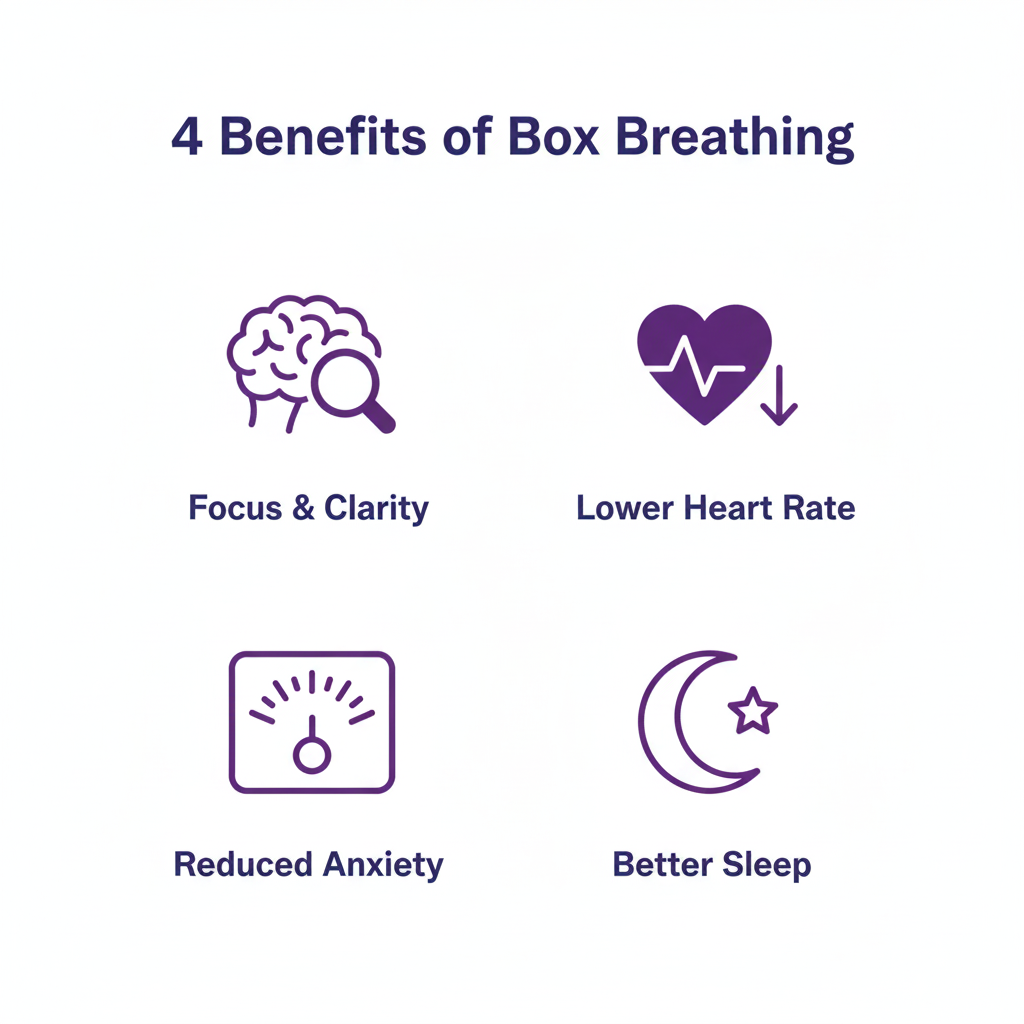 Four key benefits of box breathing: improved focus, lower heart rate, reduced anxiety, better sleep
Key Takeaways
- Box breathing is a simple, evidence-based technique for stress management
- It works by activating the parasympathetic nervous system
- The 4-4-4-4 pattern is optimal for most people
- Consistent practice amplifies benefits
- It's a skill that improves with use
Ready to track how box breathing affects your HRV and stress levels? Safe-Flow helps you build consistent breathwork habits and measure your progress with real biometric data.
Join the Beta
Be among the first to experience Safe-Flow. Get early access + exclusive breathing guides.