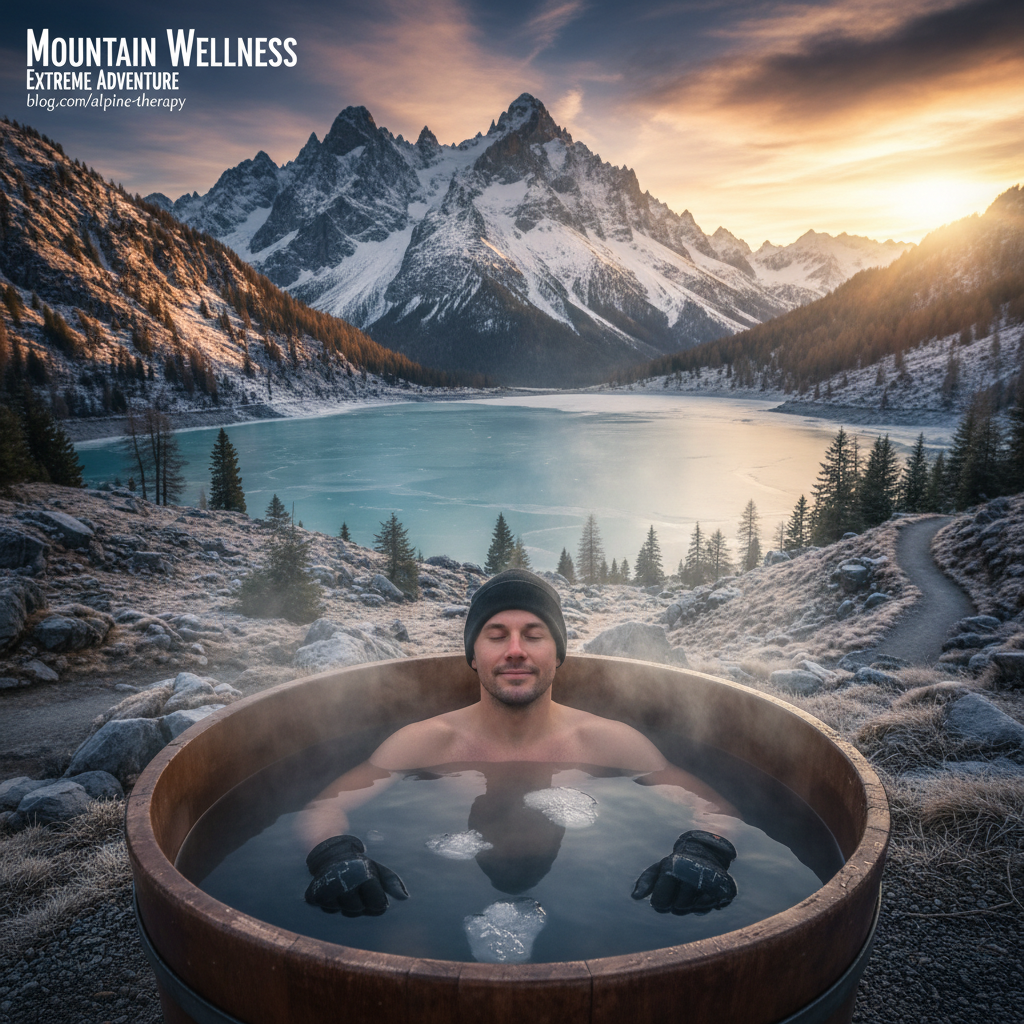
Ice Bath Training in the Alps: A Breathworker's Journey
The water temperature read 4°C. I was standing in a glacial stream at 2,500 meters in the French Alps, surrounded by peaks still white with snow in July. My breath was the only thing between me and hypothermia.
This is the story of how I went from struggling with cold showers to spending 20 minutes in glacier-fed waters—and what the mountains taught me about breathwork.
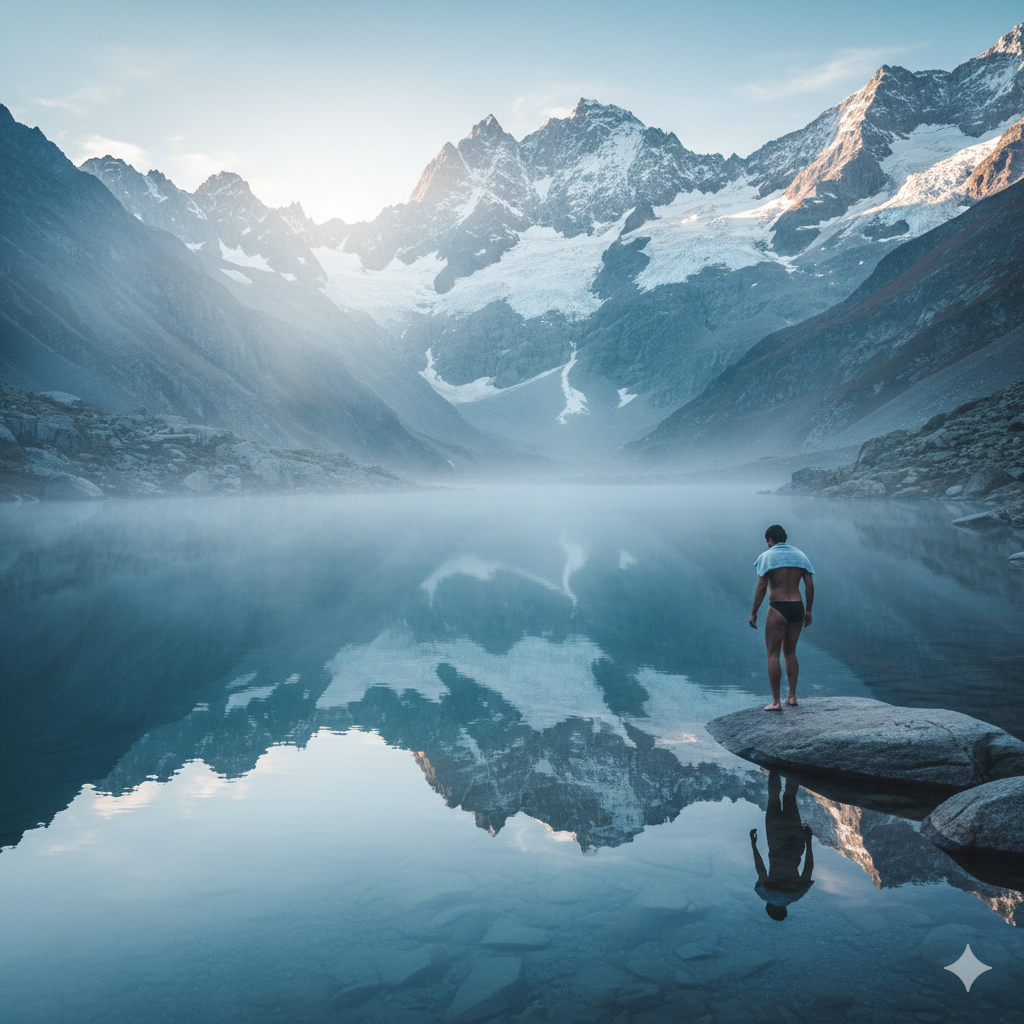 Serene alpine lake in the mountains with morning mist—the setting for cold immersion training
Starting Point: Cold Shower Failure
Six months before the Alps, I couldn't last 30 seconds in a cold shower. I'd read about Wim Hof, watched the Vice documentary, and decided I wanted those benefits: better immunity, more energy, reduced inflammation.
My first attempts were pathetic:
- Turn the water cold
- Gasp uncontrollably
- Panic
- Turn it back to warm
- Tell myself I'd try again tomorrow
The problem wasn't the cold—it was my breath. I had no control.
Phase 1: Learning to Breathe First
Before touching cold water again, I spent two months on breath fundamentals:
Daily practice:
- 10 minutes of Wim Hof breathing every morning
- Box breathing during stressful moments
- Nasal breathing during exercise
- Cold exposure delayed until breath was stable
Key insight: Cold exposure amplifies whatever your nervous system is already doing. If you're breathing like you're panicking, you will panic. If you're breathing like you're calm, you can stay calm.
Only when I could complete 3 full rounds of Wim Hof breathing without gasping did I return to cold water.
Phase 2: Progressive Cold Exposure at Home
Armed with better breath control, I built cold tolerance systematically:
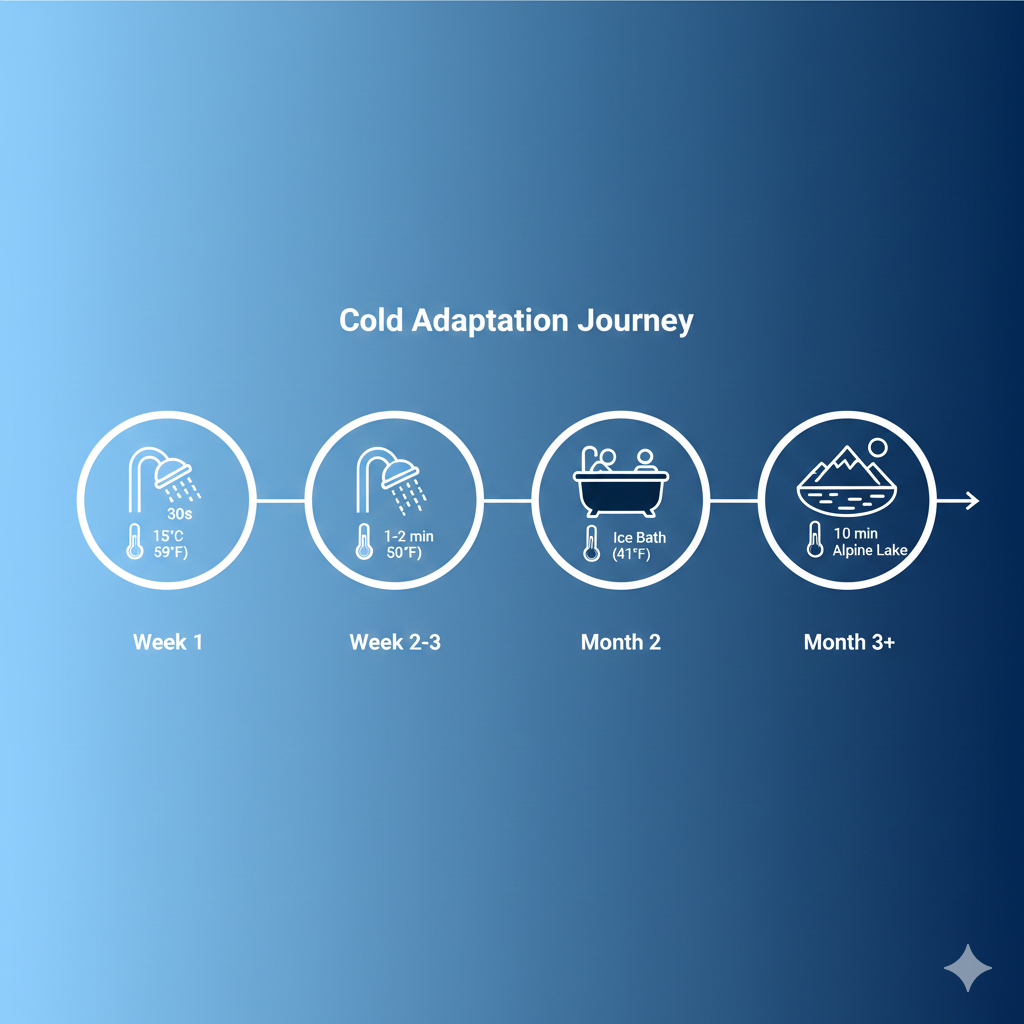 Cold adaptation timeline: Week 1 (30 sec cold shower), Week 2-3 (1-2 min), Month 2 (ice bath introduction), Month 3+ (10 min alpine lake)
Week 1-2: End showers with 30 seconds cold Week 3-4: 1 minute cold Month 2: 2 minutes cold Month 3: Full cold showers (no warm water at all) Month 4: Ice baths at home (15°C, then 10°C)
The breathing protocol that worked:
- Before entering: 3 slow, deep breaths
- On contact: Exhale slowly, don't gasp
- During immersion: Long, slow exhales; short inhales
- Focus point: Watch the breath, not the cold
By month 4, I could sit in a bathtub filled with ice for 5 minutes while maintaining conversation. The cold hadn't changed—my relationship to it had.
Phase 3: The Alps Expedition
The Setup
I planned a week in Chamonix with a specific goal: train cold exposure in natural alpine waters. No bathtubs, no controlled environments. Real cold, real mountains.
Equipment:
- Wetsuit booties (for walking on rocks, not for the water)
- Wool changing robe
- Thermometer
- Timer
- Journal
- Emergency warming supplies (just in case)
Day 1: The Shock of Natural Cold
My first alpine immersion was in a stream near Lac Blanc at 2,200m. Water temperature: 8°C.
Sounds manageable after ice baths at home, right? Wrong.
Natural cold is different:
- Moving water strips heat faster
- Altitude means less oxygen available
- No walls, no control of environment
- The psychological element of wilderness
I lasted 90 seconds before my breath broke. But I knew what to do: slow exhale, nasal breathing, try again.
Day 2-3: Adaptation Begins
Found a spot where a glacial stream formed a natural pool. Water temperature: 6°C. I trained there twice daily.
Morning protocol:
- 20 minutes of breathwork on the rocks
- Enter water slowly, exhaling continuously
- Submerge to shoulders
- Maintain slow breathing
- Exit when control wavers (not when cold is unbearable)
By Day 3, I could stay 5 minutes. The secret wasn't toughness—it was breath rhythm. When my exhales stayed long and controlled, my body adapted. When my breath shortened, panic followed within seconds.
Day 4: The Glacier Stream
I found a stream flowing directly from a glacier at 2,500m. Thermometer reading: 4°C.
This was different. This wasn't cold—this was ice that happened to be liquid.
First attempt: 45 seconds. My hands went numb immediately. Breath broke at 30 seconds.
Second attempt (after 15 minutes recovery): 2 minutes. Focused entirely on exhale. Ignored the cold.
Third attempt: 4 minutes. Something clicked. The cold was still there, but I was observing it rather than fighting it.
Insight: At extreme cold, the mind becomes incredibly focused. There's no room for rumination, anxiety, or distraction. Just breath and sensation.
Day 5-6: Building Duration
Returned to the glacier stream daily. By Day 6:
- Entry without hesitation
- 10+ minutes in 4°C water
- Conversation possible (barely)
- Rapid recovery (warm within 5 minutes of exit)
Physical adaptations noticed:
- Shivering decreased
- Core stayed warmer longer
- Extremities adapted last
- Mental calm came faster
Day 7: The 20-Minute Session
Final day. I decided to test my limits in the 6°C natural pool where I'd first struggled.
The protocol:
- 30 minutes of breathwork beforehand
- Slow entry, continuous exhale
- Shoulders submerged
- Timer set, then ignored
- Focus only on breath quality
I stayed 20 minutes. Not through willpower—through breath.
The cold became background noise. My attention was entirely on the rhythm: slow inhale, long exhale, observe sensation, don't react.
When I emerged, I didn't feel triumphant. I felt peaceful. The mountain, the cold, the breath—they'd become one experience.
What The Alps Taught Me
1. Breath Is The Variable
Temperature is fixed. Duration is a choice. But breath is the control panel.
In 4°C water:
- Fast, shallow breathing = panic in 30 seconds
- Slow, controlled breathing = calm for 10+ minutes
Same water, same body, completely different experience.
2. Natural Cold Is A Teacher
Ice baths at home are controlled. The bathtub stays still. The room is warm. Help is nearby.
Natural cold strips those comforts away. You're alone with the elements. There's no pause button.
This forces a deeper level of practice. You can't fake it.
3. Adaptation Is Real
Day 1: 90 seconds was my limit Day 7: 20 minutes was comfortable
This wasn't just mental—measurable physiological changes happen with cold exposure training:
- Improved vasoconstriction
- Brown fat activation
- Enhanced cold shock protein production
- Parasympathetic nervous system strengthening
4. The Mind-Body Loop
Cold exposure revealed how much my mind affects my body:
- Anticipatory anxiety = higher heart rate before even touching water
- Calm breathing = slower heart rate even in extreme cold
- Fear thoughts = immediate vasoconstriction
- Acceptance = relaxed blood vessels, better heat distribution
5. Nature Amplifies Everything
The mountains made every practice more intense, more meaningful, more memorable. Cold exposure in a bathroom is training. Cold exposure in the Alps is transformation.
Practical Tips for Natural Cold Training
Preparation
- Build home tolerance first - Don't start in nature
- Master your breath - 2+ months of daily breathwork before extreme cold
- Know the location - Scout for hazards, exits, and recovery spots
- Never train alone - Always have someone nearby
- Check conditions - Water levels, weather, temperature
Safety Protocol
Before entering:
- Breathwork to stabilize nervous system
- Warm-up movement
- Prepare exit and warming supplies
During immersion:
- Monitor breath quality constantly
- Exit if breath control breaks
- Start with shorter durations
- Never touch your core temperature limit
After exiting:
- Movement before warming
- Don't rush to heat sources
- Monitor for hypothermia signs
- Record temperature, duration, and sensations
Best Alpine Locations
French Alps:
- Lac Blanc area streams (Chamonix)
- Arve River natural pools
- High-altitude tarns
Swiss Alps:
- Glacier streams near Zermatt
- Alpine lakes above treeline
- Snowmelt pools in summer
Austrian Alps:
- Tyrolean mountain streams
- High-altitude Bergsees
The Ongoing Practice
I'm back home now, but the Alps changed my practice permanently. I still do cold showers and ice baths, but now I understand what they're training: not cold tolerance, but breath mastery.
Every cold exposure is a breath meditation. The cold just makes it impossible to fake.
Ready to track how cold exposure affects your recovery and stress levels? Safe-Flow integrates with wearables to show you real-time HRV changes during and after cold training—turning mountain adventures into measurable data.
Join the Beta
Be among the first to experience Safe-Flow. Get early access + exclusive breathing guides.