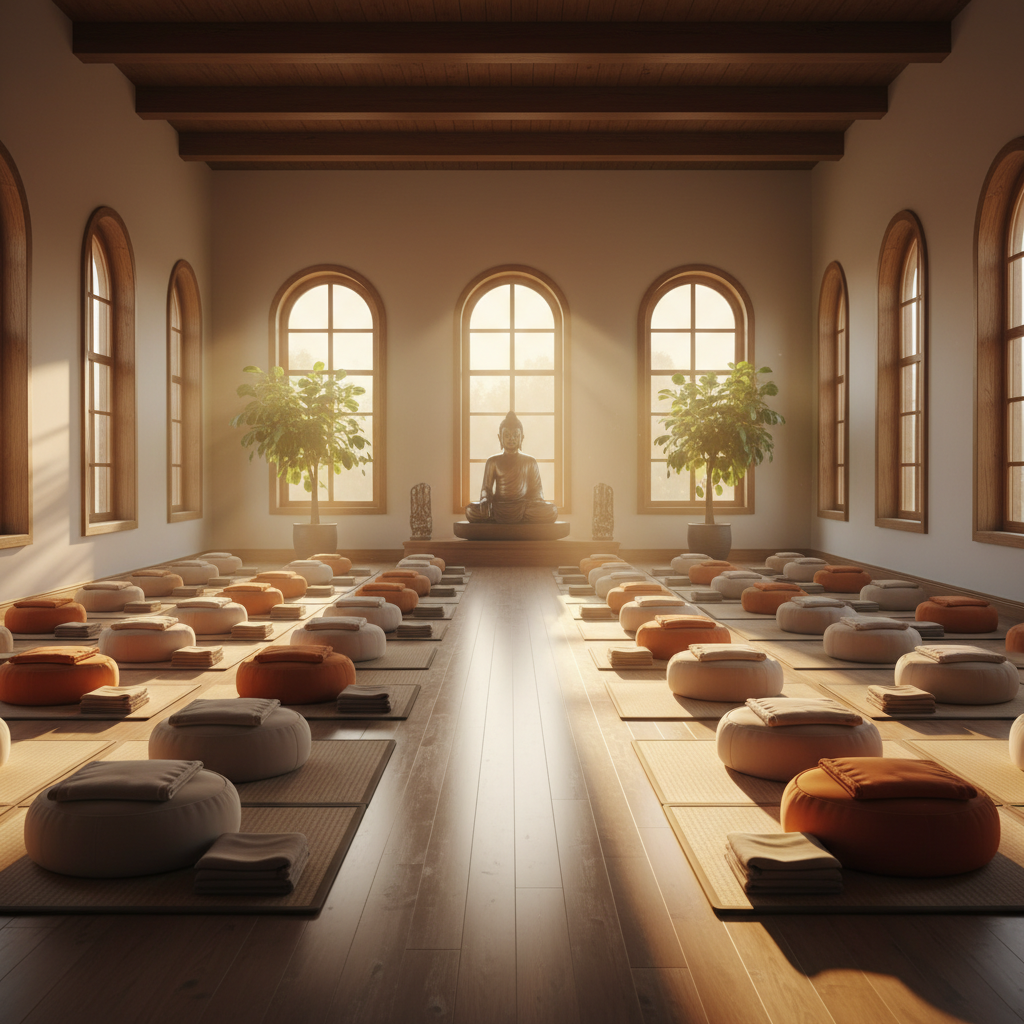
From Yacht Party to Silent Retreat: My 63 Days of Vipassana
One week before my first Vipassana retreat, I was on a yacht in Marbella. 25 friends. My 30th birthday. Post-COVID freedom exploding into parties, alcohol, and the kind of chaos that only happens when people finally escape lockdown.
Seven days later, I was sitting in complete silence, surrounded by strangers I couldn't speak to, watching my mind unravel.
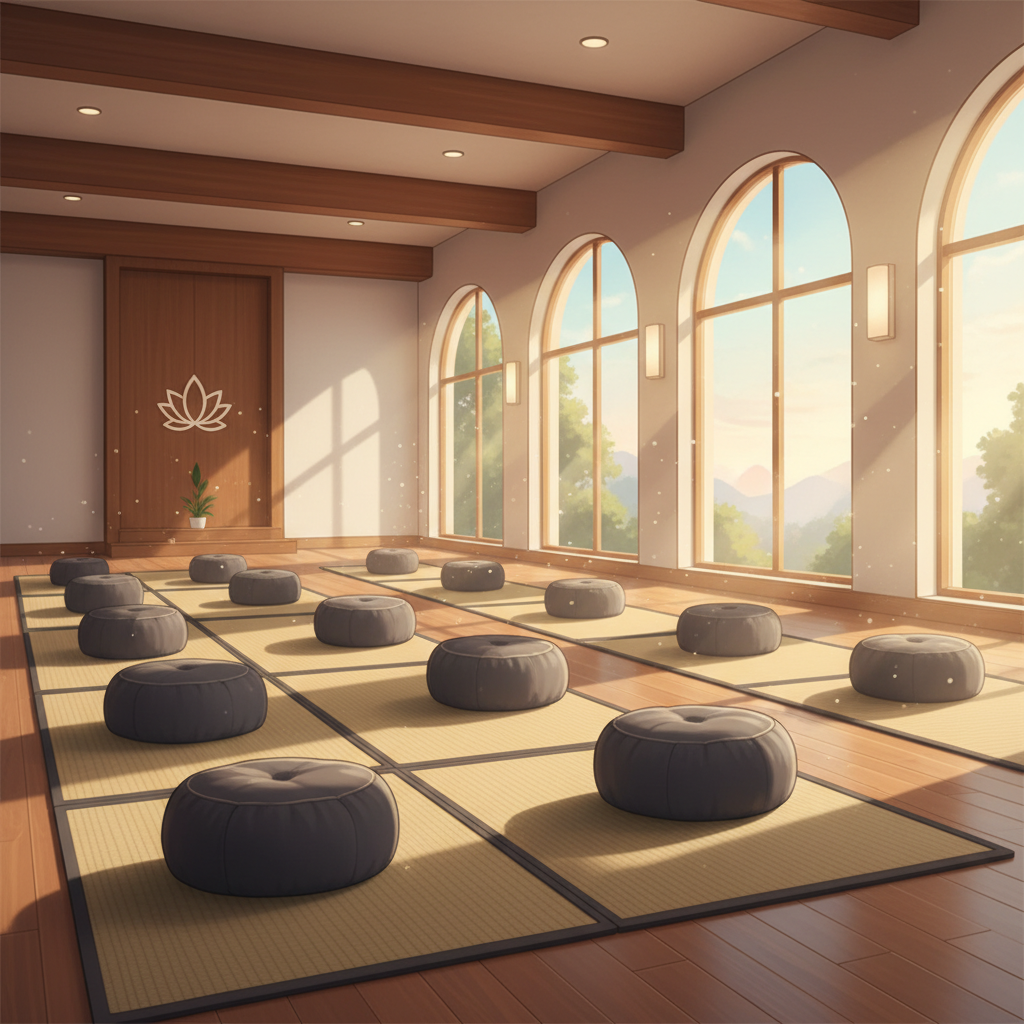 Vipassana also means group meditations where patience can be severely tested, yet the collective effort is rewarding
Why I Needed This
I had founded my company, Arxum, several years earlier. On paper, things were going well. We had landed clients in biotech, pharma, even the European Space Agency. The kind of clients that should make you feel confident.
But I didn't feel confident. I felt like an imposter.
Fundraising meetings terrified me. Presenting to industrial clients made me question everything. I had built something real, but internally, I couldn't match the scale of what I had created. The gap between external success and internal doubt was crushing.
After Marbella, staring at the ceiling with a hangover, I knew something had to change. Not the business—me. I needed to become the person capable of carrying what I had built.
I had signed up for Vipassana months earlier, almost on a whim. Now it felt like the only logical next step.
The Contrast
Marbella: 25 friends, endless noise, champagne on a yacht, everyone talking, laughing, celebrating.
Vipassana: 50 strangers, complete silence, water and vegetarian meals, no eye contact, just you and your mind for 100+ hours.
The whiplash was intentional. I wanted to shock my system. I got what I asked for.
What Is Vipassana?
Vipassana means "to see things as they really are" in Pali. It's one of India's oldest meditation techniques, rediscovered by Gautama Buddha and now taught worldwide through free retreats.
The rules:
- 10 days of complete silence (Noble Silence)
- No phones, books, writing, or eye contact
- 10+ hours of meditation daily
- Wake at 4 AM, lights out at 9:30 PM
- Simple vegetarian meals, no dinner
- Free (donation-based after completion)
The First Retreat: Getting Hit Hard
Days 1-3: The Noise Inside
The first three days focus on Anapana—observing your natural breath without controlling it. No Wim Hof patterns. No box breathing counts. Just watching.
What sounds simple becomes torture.
My mind was still in Marbella. Still replaying conversations. Still planning the next fundraising pitch. Still worried about that ESA contract. Still everywhere except on my breath.
I realized I had never actually been present. Not once. My entire life was either replaying the past or rehearsing the future. The present moment was just a brief pit stop between mental movies.
Day 4: The Breaking Point
Day 4 introduces body scanning—systematically moving attention through your body, observing sensations without reacting.
This is when Vipassana hit me. Hard.
The physical pain of sitting became a mirror for everything I had been avoiding. My knees screamed like my doubts about fundraising. My back ached like my fear of not being enough. Every sensation became a metaphor I couldn't escape.
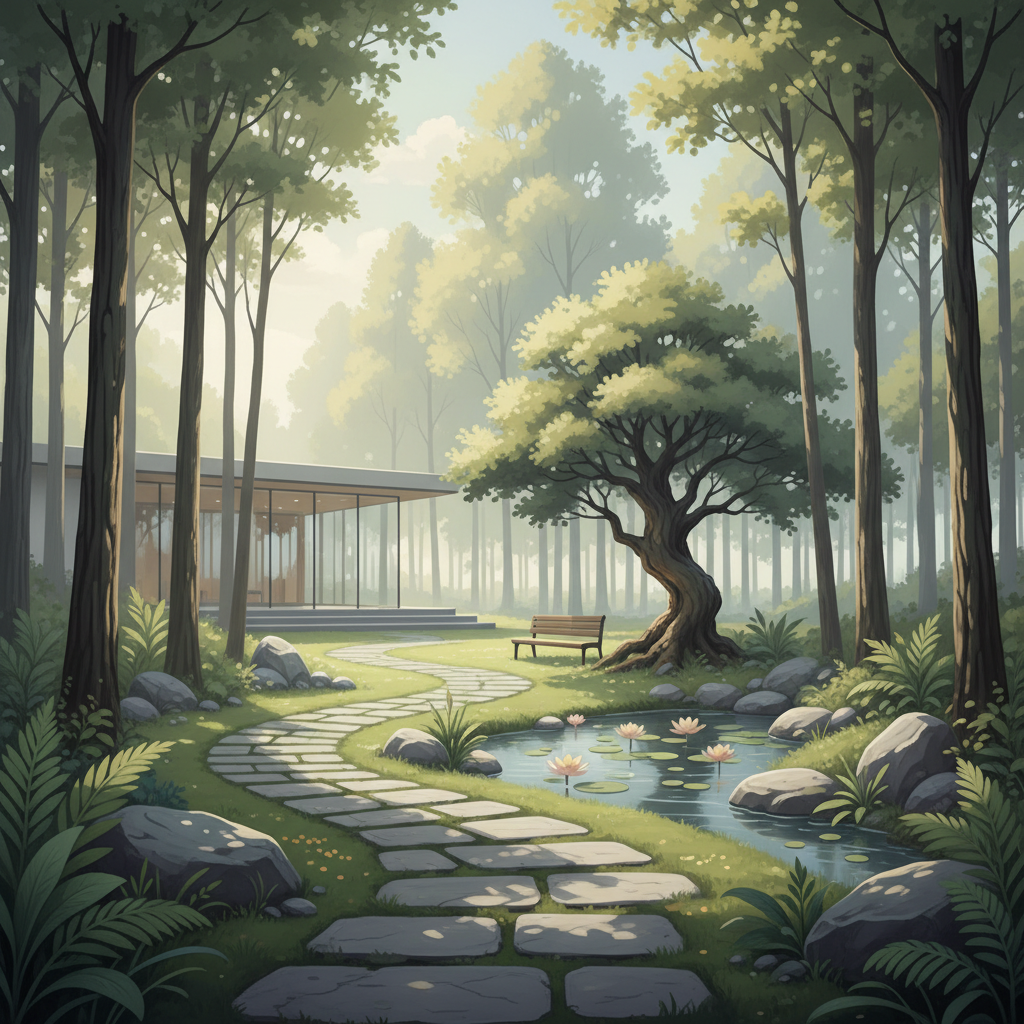 Every center has a peaceful walking path to encourage meditation and calm. You quickly find your routine there
I wanted to quit. I counted the days like a prisoner. I mentally composed resignation emails to my investors.
But I stayed.
Days 5-7: Something Shifts
Around day 5, the technique started working. I began feeling sensations I had never noticed—subtle vibrations, warmth, pressure. My body was constantly generating data I had been ignoring for 30 years.
And then: the insight that changed everything.
Every emotion starts as a body sensation.
Anxiety isn't a thought—it's chest tightness. Fear isn't a concept—it's a cold contraction in the stomach. Confidence isn't an idea—it's an expansion in the chest.
I had been fighting thoughts my whole life. But thoughts come from sensations. Address the sensation, and the thought loses its power.
For the first time, I understood why I felt like an imposter. It wasn't intellectual—it was physical. A specific contraction, a specific pattern of tension. And patterns can be changed.
Days 8-10: Integration
By day 8, the silence felt natural. The 4 AM wake-ups felt easy. Something had reorganized inside me.
Day 10, Noble Silence breaks. We could speak again.
The first conversations were surreal. People I had eaten next to for 10 days finally had names, voices, stories. Many had similar breaking points. Most felt transformed.
 Discovering your reaction patterns to sensations is an experience that swings from bliss to frustration—a path full of wisdom
What Came After: 63 Days of Silence
That first retreat wasn't enough. I knew I had scratched the surface of something important.
Over the following years, I returned:
- Multiple 10-day retreats in France
- A pilgrimage to Lumbini, Nepal—Buddha's birthplace
- 63 total days in silence across different centers
Each retreat went deeper. The technique refined. The insights compounded.
I also built a daily practice: 2 hours every day. One hour morning, one hour evening. Non-negotiable.
What Vipassana Actually Taught Me
1. The Invisible Becomes Visible
We walk around blind to our own internal experience. Vipassana trains you to see what was always there—the constant flow of sensations, the automatic reactions, the patterns running your life without your consent.
Once you see them, you can change them.
2. The Visible Becomes Invisible
What used to feel overwhelming—the fundraising pressure, the client meetings, the weight of responsibility—started feeling lighter. Not because circumstances changed, but because I stopped adding mental drama to every situation.
The external world loses its grip when you stop reacting automatically.
3. Humility and Happiness Are Connected
Vipassana strips away pretense. You sit with your own mind for 100+ hours. You see how chaotic, petty, and reactive it can be. You can't hide from yourself.
This sounds painful—and it is. But it's also liberating. When you stop pretending to be something you're not, happiness becomes possible.
4. Equanimity Is a Skill
The core teaching of Vipassana: observe without reacting. Pleasant sensations arise—don't crave more. Painful sensations arise—don't push away. Just observe.
This isn't suppression. It's freedom. When you stop being controlled by automatic reactions, you gain choice over your responses.
The Entrepreneur Application
After Vipassana, everything about running a company felt different:
Fundraising: I stopped trying to perform confidence. I just showed up, present, without the internal noise. Investors responded to authenticity, not performance.
Client meetings: I could actually listen. Not rehearse my response while pretending to listen—actually hear what they were saying. This changed everything.
Stress management: Problems didn't disappear. But my relationship to problems changed. I could face challenges without the additional layer of panic about the challenges.
Decision making: When you're not constantly reacting to fear, you make better decisions. Obvious in retrospect, impossible to do without training.
A Practice for Managing Life
After 63 days of silent retreats and years of daily practice, I've developed a conviction:
Vipassana is a technology for living a happy, stable life.
Not happiness as constant pleasure—that's impossible and exhausting to pursue. Happiness as equanimity. The ability to face whatever arises without being destabilized.
This applies whether you're running a startup, raising kids, or just trying to get through the day without anxiety winning.
Should You Do This?
Good candidates:
- People who feel a gap between external success and internal confidence
- Entrepreneurs carrying weight they don't know how to manage
- Anyone who suspects their mind is running them instead of the reverse
- Experienced meditators wanting depth
Maybe wait if:
- You're in acute mental health crisis (stabilize first)
- You can't take 10 days away from responsibilities
- You're seeking quick fixes or spiritual entertainment
- You're unwilling to follow the rules completely
How to Start
Vipassana courses run globally at centers following the S.N. Goenka tradition (dhamma.org). They're always free—donations are accepted only after completion.
Popular centers book months in advance. Apply early.
If 10 days feels too intense, start with a shorter meditation practice. But know this: the depth of Vipassana comes precisely from the length. There's no shortcut to sitting with yourself for 100+ hours.
The Summary
One week after a yacht party in Marbella, I entered silence. I came out different.
63 days of silent retreats later, I can say this: Vipassana makes the invisible visible and the visible invisible. It strips away what doesn't matter and reveals what does.
It made me humble. It made me happy. And it made me capable of carrying what I had built.
If you feel the gap between who you are and who you need to become—this practice can close it.
Vipassana transformed my relationship with stress, breath, and body. If you're ready to track how meditation and breathwork affect your physiology, Safe-Flow connects ancient wisdom with modern biometrics—showing you real data on HRV, recovery, and stress levels over time.
Join the Beta
Be among the first to experience Safe-Flow. Get early access + exclusive breathing guides.