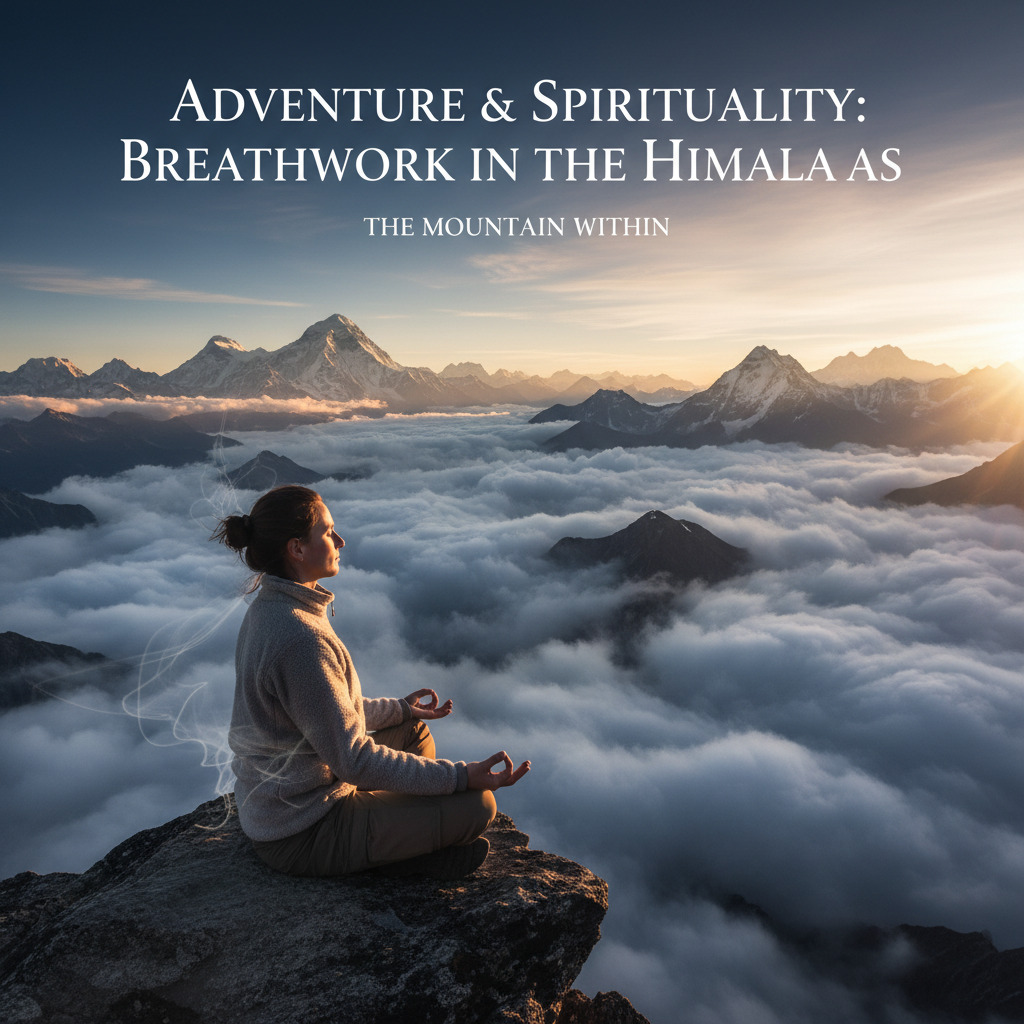
Breathwork at 4,000m: Lessons from the Himalayas
At 4,000 meters, the air contains 40% less oxygen than at sea level. Every breath matters. Every technique is tested.
I went to Nepal to trek to Annapurna Base Camp. I came back with a completely different understanding of what breathwork actually is—and what happens when you push it to its limits.
Why Altitude Changes Everything
At sea level, we take breathing for granted. The air is rich, our bodies are calibrated, and inefficiencies don't matter much.
At altitude, everything changes:
Physiological reality:
- Less oxygen per breath (partial pressure drops)
- Faster breathing required to maintain oxygen levels
- Heart works harder
- Sleep becomes disrupted
- Cognitive function decreases
Breathwork implications:
- Hyperventilation techniques become risky
- Breath holds feel different (and are shorter)
- Nasal breathing becomes even more critical
- Recovery between exercises takes longer
I'd been practicing breathwork daily for over a year. Altitude humbled me in days.
The Trek: Breathing Through the Climb
Days 1-3: Pokhara to 2,500m
Starting elevation: 800m. The first days felt easy. Standard breathwork practice continued as normal.
Morning routine:
- 15 minutes of Wim Hof breathing
- 5 minutes of box breathing
- Nasal breathing during the hike
Everything worked perfectly. I felt strong. This was going to be easy, I thought.
Days 4-5: 2,500m to 3,500m
First signs of altitude appeared. My morning Wim Hof practice felt different.
What changed:
- Breath holds shortened by 30%
- Tingling sensations came faster and stronger
- Recovery between rounds took longer
- I felt slightly dizzy after practice
I shortened my practice: 2 rounds instead of 3, shorter holds.
On the trail:
- Nasal breathing became impossible on steep sections
- Heart rate spiked faster
- Rest stops became more frequent
My guide, Pemba, noticed my breathing. "Slowly, slowly," he said. "The mountain teaches patience."
Days 6-7: 3,500m to 4,130m (Annapurna Base Camp)
This is where altitude really hit.
Night at 3,700m (Machhapuchhre Base Camp):
- Woke up gasping multiple times
- Periodic breathing during sleep (common at altitude)
- Mild headache
- Appetite decreased
Morning breathwork attempt: I tried my usual Wim Hof routine. After 20 breaths, I felt intensely light-headed. I stopped. My body was telling me something.
The final push to 4,130m: Every step required conscious breathing. I counted: inhale for 2 steps, exhale for 3 steps. Sometimes I stopped just to breathe for a minute before continuing.
Arriving at Annapurna Base Camp, surrounded by 7,000m+ peaks, I felt accomplished—but also completely drained.
Altitude Breathing Insights
1. Less Is More (Really)
The Wim Hof method I practiced at sea level was designed for oxygen-rich environments. At altitude, hyperventilating already-thin air created problems:
- More CO2 expelled = blood pH shifts faster
- Less oxygen available = hypoxia risk increases
- Stress response triggers more easily
Adaptation: At altitude, I switched to slow, gentle breathing. No hyperventilation. No extended breath holds. Just steady, nasal, rhythmic breathing.
2. Nasal Breathing Is Non-Negotiable
Mouth breathing at altitude accelerates problems:
- Faster dehydration
- More heat loss
- Less nitric oxide
- Poorer oxygen absorption
I forced nasal breathing even when it felt impossible. Walking slower was better than breathing worse.
3. The Body Knows
Every breathwork technique has limits. At altitude, I learned to listen to signals I usually ignored:
- Slight dizziness = stop
- Heart racing = slow down
- Headache appearing = reduce effort
At sea level, I'd push through these. At altitude, pushing through meant altitude sickness.
4. Acclimatization Is Breathwork
The body's response to altitude IS a breathwork lesson:
- Breathing rate increases automatically
- Blood pH adjusts over days
- New red blood cells are produced
- Hemoglobin concentration increases
This happens without technique—just time at altitude. It reminded me that the body has its own wisdom. Sometimes the best breathwork is simply allowing the body to adapt.
Specific Altitude-Adapted Practices
Morning Practice (Above 3,000m)
What I actually did:
- Wake, sit upright, give body time to adjust
- 5 minutes of slow, nasal breathing (6 breaths per minute)
- Light movement (gentle stretches)
- Warm drink before any intense breathing
What I avoided:
- Wim Hof hyperventilation
- Extended breath holds
- Any practice that increased heart rate quickly
During the Trek
The Altitude Breathing Pattern:
- Inhale: 2-3 steps
- Exhale: 3-4 steps
- All nasal when possible
- Rest and breathe before you need to (proactive, not reactive)
Pressure Breathing (Useful above 4,000m):
- Exhale forcefully through pursed lips
- Creates back-pressure in lungs
- Improves oxygen absorption
- Used by mountaineers on high peaks
Evening Recovery
Before sleep:
- Gentle belly breathing, lying down
- Box breathing variation (4-3-4-3, shortened from normal)
- No stimulating practices
- Elevation of head slightly
Managing altitude sleep disruption:
- Accept that sleep will be different
- Don't panic at periodic breathing
- If headache worsens, descend—breathwork won't fix altitude sickness
The Bigger Lesson
Altitude stripped away my confidence in technique. It revealed something important:
Breathwork is context-dependent.
The methods that made me feel superhuman at sea level were useless—even dangerous—at altitude. The practices I'd dismissed as "too gentle" became essential.
This changed how I think about all breathwork:
- There's no universally "best" technique - only the best technique for your current context
- The body's feedback matters more than any protocol - if it's not working, stop
- Adaptation is the goal - not forcing the same practice everywhere
- Sometimes the most advanced practice is the simplest one
Coming Down: Reverse Adaptation
Descending was its own lesson. As oxygen increased:
- Energy flooded back
- Sleep improved immediately
- Breath holds extended beyond baseline
- I felt superhuman—temporarily
Back in Pokhara at 800m, I tried my normal Wim Hof practice. My breath holds were 30% longer than before the trek. The altitude training had built capacity I didn't know I had.
Practical Takeaways
If You're Going to Altitude
- Modify your practice before you arrive - don't wait for problems
- Prioritize slow, nasal breathing - forget hyperventilation
- Shorten breath holds - 50% of normal is a good starting point
- Listen to your body ruthlessly - stop at first signs of trouble
- Acclimatize properly - no breathwork replaces proper ascent rates
If You Want Altitude Benefits Without Altitude
Several techniques simulate some altitude effects:
- Intermittent hypoxic training - controlled low-oxygen breathing
- Breath hold walking - Oxygen Advantage style
- Repeated breath holds - builds CO2 tolerance
These provide some benefits but don't replicate true altitude exposure.
The Mountains Teach Humility
I went to Nepal as an experienced breathworker. I came back as a student.
The Himalayas taught me that every practice has limits, every technique has context, and the body's wisdom often exceeds our protocols.
Now, when I practice breathwork at sea level, I remember the mountain. I remember what happens when oxygen isn't guaranteed. I remember that the most sophisticated practice is sometimes just breathing—slowly, gently, gratefully.
Curious how altitude affects your HRV and recovery? Safe-Flow helps you track biometric changes during altitude training and acclimatization—showing you what the thin air is doing to your nervous system in real time.
Join the Beta
Be among the first to experience Safe-Flow. Get early access + exclusive breathing guides.