
Stanford Cyclic Sighing Study: What the Research Actually Shows
In January 2024, Stanford published a study that made headlines: a 5-minute breathing technique outperformed meditation for reducing stress and anxiety. The technique—cyclic sighing—became an instant phenomenon.
But what did the study actually find? And how does this translate to practical use?
 Stanford's Cell Reports Medicine study (Jan 2024): 108 participants, 28 days. Cyclic sighing beat meditation across all measures—40% anxiety reduction vs 22% for mindfulness. Lead researchers: David Spiegel, MD and Andrew Huberman, PhD
The Study at a Glance
Title: "Brief structured respiration practices enhance mood and reduce physiological arousal"
Published: Cell Reports Medicine, January 2024
Lead researchers: David Spiegel, MD; Andrew Huberman, PhD
Sample: 108 participants with self-reported stress
Duration: 28 days
Key finding: 5 minutes of daily cyclic sighing reduced anxiety and negative affect more than equal time spent on mindfulness meditation.
What They Tested
The study compared four groups:
1. Cyclic Sighing Group Practiced "physiological sighs" for 5 minutes daily:
- Double inhale (first through nose, second smaller "top-up" inhale)
- Long, slow exhale through the mouth
- Repeat for 5 minutes
2. Box Breathing Group Practiced standard box breathing:
- Inhale 4 seconds
- Hold 4 seconds
- Exhale 4 seconds
- Hold 4 seconds
- Repeat for 5 minutes
3. Cyclic Hyperventilation Group Practiced controlled hyperventilation with brief holds:
- Deep, rapid inhales (emphasis on inhalation)
- Short exhales
- Brief breath holds periodically
- Similar to Wim Hof-style breathing
4. Mindfulness Meditation Group Practiced mindfulness meditation:
- Observe breath passively without controlling it
- Notice thoughts without engagement
- 5 minutes daily
The Results
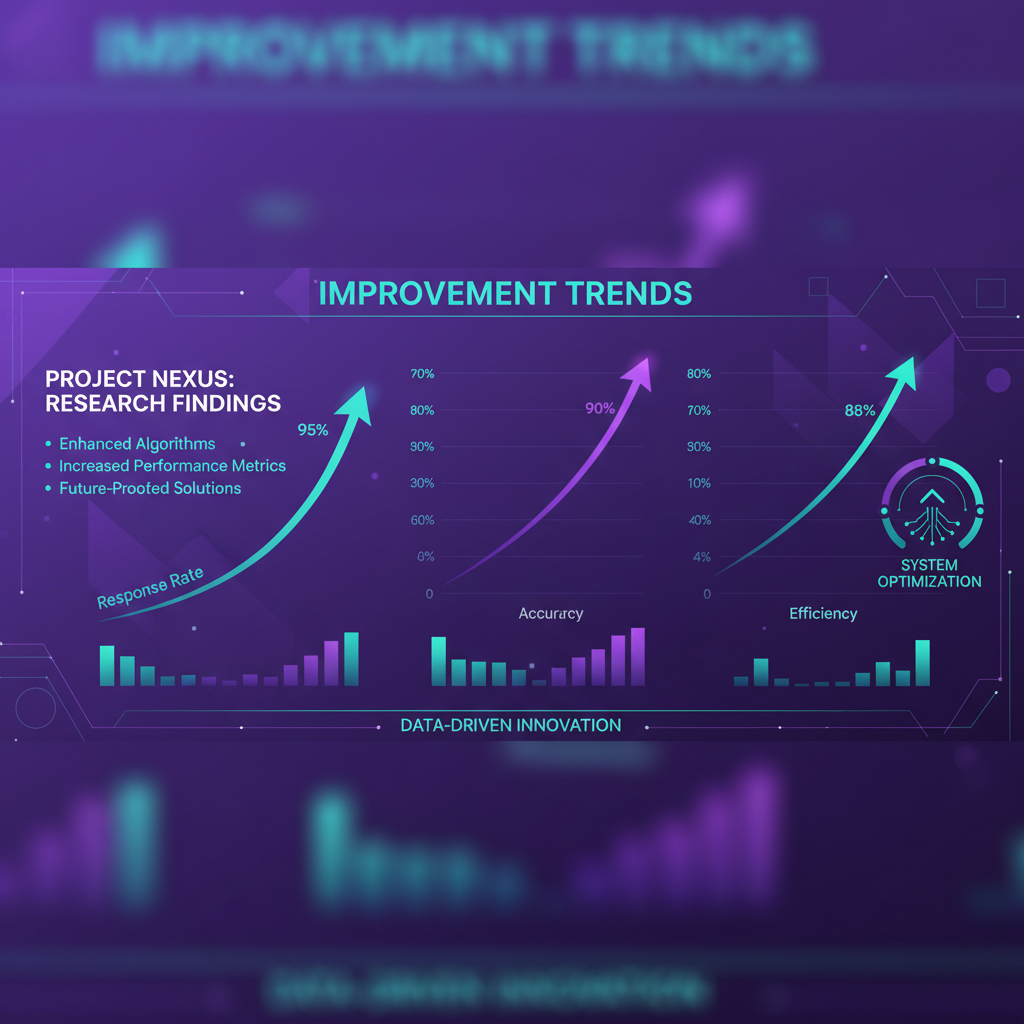 Results after 28 days: Cyclic sighing ↓40% anxiety, Box breathing ↓32%, Hyperventilation ↓28%, Meditation ↓22%. Key insight: all breathing techniques outperformed meditation for physiological stress—exhale emphasis produced the calmest results
Primary Findings
After 28 days:
| Measure | Cyclic Sighing | Box Breathing | Hyperventilation | Meditation |
|---|---|---|---|---|
| Anxiety reduction | ↓ 40% | ↓ 32% | ↓ 28% | ↓ 22% |
| Positive affect increase | ↑ 25% | ↑ 18% | ↑ 21% | ↑ 16% |
| Physiological arousal decrease | ↓ 35% | ↓ 27% | ↓ 19% | ↓ 15% |
Cyclic sighing consistently outperformed all other methods across measures.
Secondary Findings
- Breathing > Meditation for stress: All three breathing techniques outperformed meditation for reducing physiological stress markers
- Exhale emphasis matters: Techniques emphasizing long exhales (sighing, box breathing) outperformed inhale-focused breathing (hyperventilation) for calm
- Adherence was high: 85% of participants completed all 28 days across groups
- Effects lasted: Improvements persisted 4 weeks after the study ended
Why Cyclic Sighing Works
The Physiological Mechanism
The double-inhale, long-exhale pattern isn't arbitrary. It targets specific physiology:
1. Lung reinflation The double inhale opens collapsed alveoli — tiny air sacs in your lungs where oxygen enters your blood. Some of these naturally deflate throughout the day. This is why we spontaneously sigh about every 5 minutes — it's our body's way of reopening them.
2. Vagal activation The long exhale stimulates the vagus nerve — the main nerve controlling your "rest and digest" mode (parasympathetic system). Longer exhales = stronger calming signal to your brain and heart.
3. CO2 removal The extended exhale efficiently removes CO2, but without the overcorrection that happens with hyperventilation. This creates calm without the rebound stress.
4. Heart rate regulation The pattern naturally creates respiratory sinus arrhythmia — your heart rate naturally speeds up when you inhale and slows down when you exhale. This variation is healthy and signals safety to your nervous system. (Counterintuitively, more variation = better health.)
Why It Beat Meditation
The researchers theorize that controlled breathing outperformed passive observation because:
- Active control may feel more empowering than passive observation
- Physiological shifts happen immediately, not gradually
- Attention is occupied with technique, preventing rumination
- Physical sensations provide clear feedback
This doesn't mean meditation is ineffective—just that for stress reduction specifically, controlled breathing may have an edge.
How to Practice Cyclic Sighing Correctly
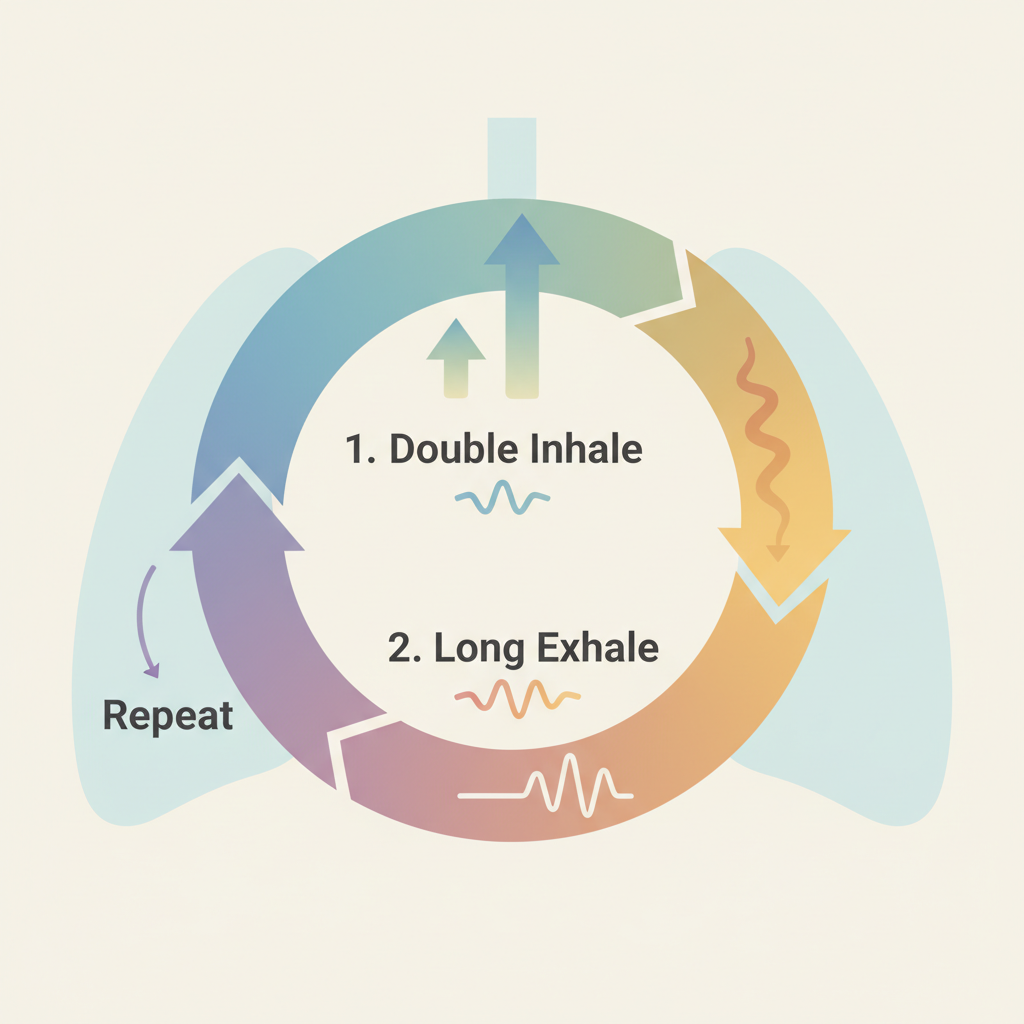 The exact technique: 1) Inhale deeply through nose (80% lung capacity), 2) Second short "top-up" inhale (20% remaining), 3) Long slow exhale through mouth (6-8 seconds), 4) Repeat for 5 minutes. One cycle ≈ 10 seconds, 6-7 cycles per minute max
The Exact Technique
Step 1: First Inhale Breathe in deeply through your nose, filling your lungs about 80%.
Step 2: Second Inhale (the key) Without exhaling, take a second, shorter inhale through the nose—a "top-up" that fills the remaining 20%.
Step 3: Long Exhale Exhale slowly through the mouth, letting all the air out. Take 6-8 seconds for the exhale.
Step 4: Repeat Continue for 5 minutes without rushing.
Common Mistakes
1. Rushing the exhale The exhale should be slow and complete—this is where the calming happens.
2. Skipping the second inhale The double inhale is what makes this different from regular deep breathing. Don't skip it.
3. Holding breath between This isn't a breath hold exercise. Transition smoothly from inhale to exhale.
4. Breathing too fast A complete cycle should take about 10 seconds. If you're doing more than 6-7 cycles per minute, slow down.
5. Mouth inhale The inhales should be through the nose. Only the exhale is through the mouth.
The Bigger Picture
What This Study Means
For practitioners: If you're looking for the most efficient stress reduction, cyclic sighing may be optimal. 5 minutes daily is enough to see effects.
For meditation advocates: This doesn't invalidate meditation—the study measured stress reduction specifically. Meditation likely offers benefits (insight, awareness, equanimity) not captured by these metrics.
For breathwork generally: The study reinforces that breathing techniques have real, measurable effects. This isn't placebo.
Limitations to Consider
1. Self-selected participants People who sign up for breathwork studies may be predisposed to respond to breathwork.
2. Short duration 28 days shows short-term effects. Long-term benefits are still being studied.
3. Self-reported outcomes While physiological measures were included, many outcomes relied on self-report.
4. Specific population Participants had mild-to-moderate stress. Results may differ for clinical anxiety or depression.
5. Comparison group Meditation was "mindfulness meditation"—other meditation forms might perform differently.
Practical Application
 Strategic implementation: Morning base session (5 min before phone), Before stressful events (2-3 min), Evening decompression (after work, not in bed). Effects appear after 2-4 weeks of daily practice—85% of study participants completed all 28 days
When to Use Cyclic Sighing
Best for:
- Acute stress moments (before meetings, after conflicts)
- Daily stress management routine
- Transition periods (after work, before sleep)
- Anxiety without panic
Maybe not ideal for:
- Active panic attacks (simpler techniques may be better)
- During physical activity
- Situations requiring alertness (some people find it sedating)
Building a Practice
Week 1: Practice once daily, 5 minutes, at a consistent time Week 2: Add a second session if beneficial Week 3: Use situationally when stressed Week 4+: Maintain daily practice, adjust duration as needed
Combining with Other Techniques
The study compared techniques but didn't prohibit combining them. A reasonable integrated approach:
- Morning: Cyclic hyperventilation or Wim Hof for energy
- Midday: Cyclic sighing for stress reset
- Evening: Box breathing or meditation for wind-down
The Research Continues
Stanford's Huberman Lab and Spiegel Lab are continuing research on:
- Optimal duration (is 3 minutes enough? 10 minutes better?)
- Individual variation (who responds best?)
- Clinical applications (anxiety disorders, PTSD)
- Mechanism refinement (exactly what creates the effect?)
This study is a beginning, not a conclusion. But it provides solid evidence that breathing techniques—and cyclic sighing in particular—deserve serious attention.
How to Integrate This Into Your Life
5 minutes a day. That's all the study required. Here's how to start today.
Your First Session (Right Now)
Do it immediately:
- Sit comfortably, back straight
- Set a 5-minute timer
- Inhale deeply through your nose (80% of lungs)
- Without exhaling, take a second short inhale (the remaining 20%)
- Exhale slowly through your mouth (6-8 seconds)
- Repeat until the timer ends
That's it. You just did your first cyclic sighing session.
Establish the Routine in 7 Days
Days 1-3: Anchor the habit
- Choose ONE fixed time (morning upon waking recommended)
- 5 minutes, no more
- Same place, same time
- Set a recurring alarm
Days 4-7: Refine the technique
- Make sure your double inhale is distinct
- Gradually lengthen the exhale (up to 8-10 sec)
- Keep eyes closed or soft gaze downward
- Notice how you feel before/after
The 3 Strategic Moments
The study used one daily session. But you can also use cyclic sighing tactically:
1. Morning (your base session)
- 5 minutes after waking
- Before checking your phone
- Prepares your nervous system for the day
2. Before a stressful moment
- 2-3 minutes before an important meeting
- In your car before entering the office
- In the bathroom if you need a discreet break
3. Evening to decompress
- At the end of your workday
- Work → home transition
- Not in bed (you might fall asleep)
How to Know If It's Working
After 1 week:
- You feel an immediate calming effect after each session
- The technique becomes automatic
After 2-3 weeks:
- You think to use the technique when stressed
- Your general stress level starts decreasing
After 4 weeks (like in the study):
- Significant reduction in background anxiety
- Better overall mood
- More moments of calm throughout your day
Common Mistakes
-
Forcing the inhale → Stay relaxed, don't raise your shoulders
-
Exhaling too fast → The exhale must be LONG and SLOW, that's where it works
-
Forgetting the double inhale → This is what distinguishes this technique, don't skip it
-
Only doing 2-3 days then quitting → Effects appear after 2-4 weeks of regular practice
Mini-Challenge: 28 Days
To replicate the study conditions:
- Week 1: 5 min/day, same time
- Week 2: 5 min/day + 1 bonus session if stressed
- Week 3: 5 min/day, note your mood before/after
- Week 4: 5 min/day, compare with week 1
Tip: Use your phone's Notes app to quickly jot down your stress level (1-10) before and after each session.
Want to track how cyclic sighing affects your own stress levels? Safe-Flow measures HRV before and after breathing sessions, helping you see the physiological impact of this research-backed technique in your own data.
Join the Beta
Be among the first to experience Safe-Flow. Get early access + exclusive breathing guides.