
2025-2026 Research: Slow Breathing vs. Medication for Anxiety
Can breathing exercises really compete with pharmaceutical treatment for anxiety? The latest clinical research from 2025-2026 provides stronger evidence than ever—and the results are compelling.
 Meta-analyses now include 40+ RCTs with over 4,000 participants. Effect sizes for slow breathing: g = -0.35 for stress, g = -0.32 for anxiety. Latest CCB trial (Feb 2026): Cohen's d = 1.44—a large effect rivaling pharmaceutical interventions
This article examines the most recent peer-reviewed studies on breathing interventions for anxiety disorders—including 2025-2026 publications.
The Research Landscape in 2026
Anxiety disorders affect approximately 300 million people worldwide. Standard treatments include:
- SSRIs (selective serotonin reuptake inhibitors)
- Benzodiazepines (for acute anxiety)
- Cognitive behavioral therapy (CBT)
- Complementary approaches (including breathing interventions)
What's changed? Breathing interventions have moved from "complementary" to "evidence-based first-line option" for mild-to-moderate anxiety.
Key Studies from 2025-2026
Study 1: Nature Scientific Reports (March 2025)
Publication: Scientific Reports, March 2025
Focus: The effect of slow breathing in regulating anxiety through interoception
What they found:
- Slow breathing at 4.5 to 6.5 breaths per minute optimally balances sympatho-vagal stress response
- Paced breathing combined with threat uncertainty tasks revealed new mechanisms
- Interoception (body awareness) mediates the anxiety-reducing effects
Key insight: The study confirmed that coherent/resonance breathing (5.5-6 bpm) remains the "sweet spot" for most adults.
Study 2: Frontiers in Human Neuroscience (July 2025)
Publication: Frontiers in Human Neuroscience, July 2025
What they tested: Whether slow-paced breathing reduces state anxiety and enhances frontal alpha asymmetry—and if effects persist after exposure to aversive stimuli
Key findings:
- Slow breathing significantly reduced state anxiety
- Enhanced midfrontal alpha asymmetry (marker of approach motivation vs. avoidance)
- Effects buffered responses to subsequent aversive visual stimuli
- Protection persisted even after the breathing stopped
Why this matters: This suggests slow breathing doesn't just calm you in the moment—it provides a "buffer" against future stressors.
Study 3: Conscious Connected Breathwork RCT (February 2026)
Publication: Journal of Affective Disorders, February 2026
What they did: First rigorous RCT of online breathwork for anxiety
- 107 adults randomly assigned to intervention (n=54) or waitlist control (n=53)
- Six weekly 90-minute group sessions
- Measured anxiety, depression, and stress outcomes
Key findings:
- Breathwork group: 10.56-point reduction in anxiety scores
- Control group: 1.89-point reduction
- Effect size: Cohen's d = 1.44 (large effect)
- Significant improvements in depression and stress measures as well
What makes this significant: A Cohen's d of 1.44 is a large effect size—comparable to or exceeding many pharmaceutical interventions.
Study 4: Resonance Frequency Breathing for GAD (June 2025)
Publication: Applied Psychophysiology and Biofeedback, June 2025
Population: 135 participants aged 18-37 with high GAD symptoms
What they tested: Whether HRV has a causal role in maintaining inhibitory control in GAD
Key findings:
- Resonance frequency breathing (RFB) training significantly improved HRV
- Improved inhibitory control compared to control breathing
- Effects observed in a population with diagnosed GAD symptoms
The implication: Breathing interventions may work by improving cognitive control, not just relaxation.
Meta-Analyses: The Big Picture
Breathwork Meta-Analysis (Updated 2025)
The most comprehensive analysis to date synthesized 40+ randomized controlled trials:
| Outcome | Studies | Effect Size | Significance |
|---|---|---|---|
| Stress reduction | 12 RCTs (785 participants) | g = -0.35 | p = 0.0009 |
| Anxiety reduction | 20 RCTs | g = -0.32 | p < 0.0001 |
| Depression reduction | 18 RCTs | g = -0.40 | p < 0.0001 |
Key conclusions:
- Breathwork consistently outperforms inactive controls
- Effects are small-to-medium but clinically meaningful
- Longer practice duration correlates with better outcomes
- Slow breathing (< 7 bpm) shows most consistent effects
Respiratory Therapy Review (2025)
A comprehensive review found that therapies with a respiratory component yielded "significantly greater decreases in anxiety symptoms compared to controls, indicating a medium to large symptom improvement effect (Hedges' g = -0.678)."
Of 58 clinical trials reviewed:
- 54 of 72 interventions were effective
- Effective protocols avoided fast-only paces and sessions < 5 minutes
- Human-guided training outperformed app-only approaches
- Multiple sessions and long-term practice showed strongest effects
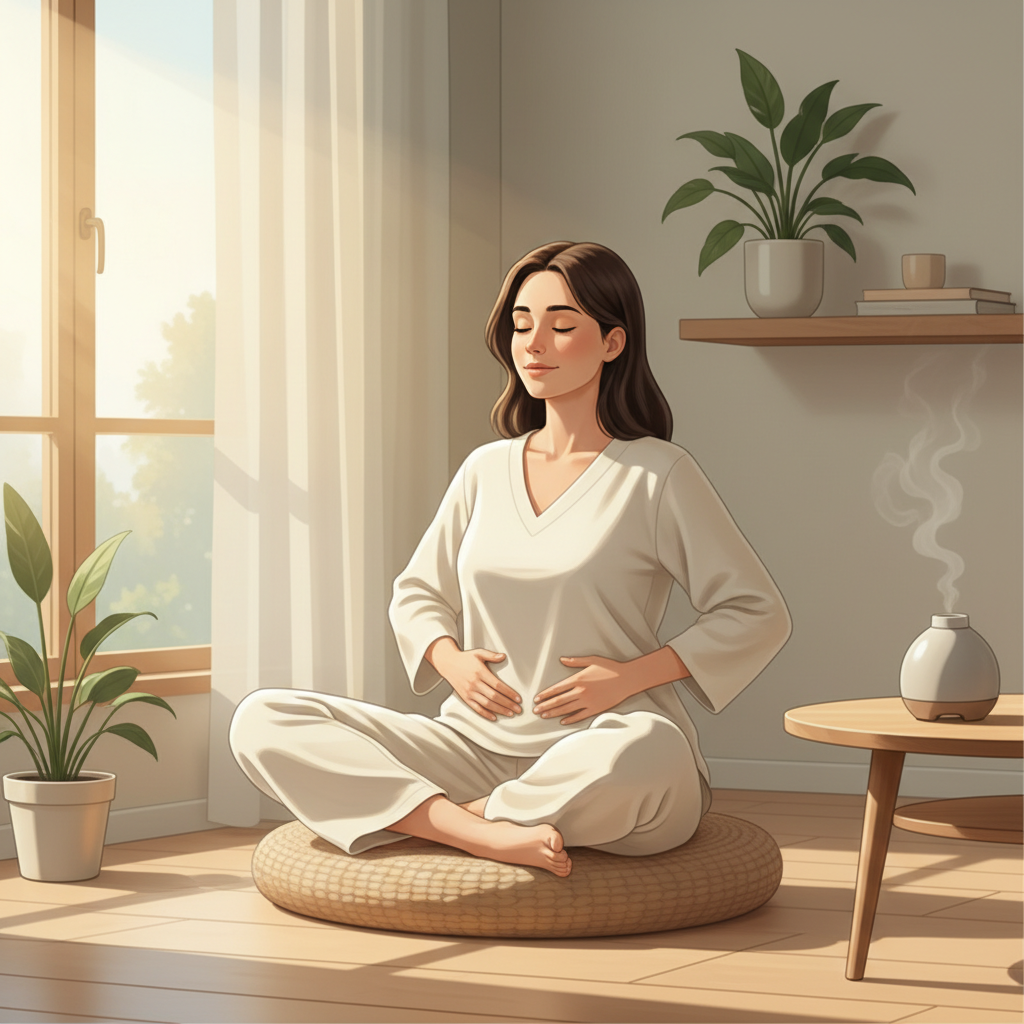 Four mechanisms explain why slow breathing works: vagal nerve stimulation increases parasympathetic activity, HRV improves (marker of resilience), frontal alpha asymmetry increases (approach vs. avoidance), and interoceptive awareness improves
How Does This Compare to Medication?
The SSRI Benchmark
Standard anxiety medications like Zoloft and Paxil have been found to reduce symptoms by an average of 1.25 points on the 56-point anxiety scale—a modest effect that may not be clinically significant for all patients.
Meanwhile, the 2026 CCB trial showed a 10.56-point reduction with breathwork.
Direct Comparison Summary
| Intervention | Typical Effect | Side Effects | Dependency Risk | Cost |
|---|---|---|---|---|
| SSRIs | Small-moderate | Common (nausea, sexual dysfunction, weight) | Discontinuation syndrome | $20-200/month |
| Benzodiazepines | Large (acute) | Significant (sedation, cognitive) | High | $10-100/month |
| Slow Breathing | Medium-large | None | None | Free |
| Combined (SSRI + Breathing) | Largest | Reduced vs. SSRI alone | Lower SSRI doses possible | Variable |
What the Research Suggests
For mild-to-moderate anxiety: Slow breathing may be as effective as medication, with advantages in side effect profile and long-term skill building.
For moderate-to-severe anxiety: Combined treatment (medication + breathing) appears to outperform either alone.
For acute anxiety: Breathing provides immediate relief without the risks of benzodiazepines.
Understanding the Mechanisms (Updated 2025)
Why Slow Breathing Works
Research now points to multiple mechanisms:
1. Vagal tone activation Slow breathing stimulates the vagus nerve, increasing parasympathetic activity. This directly counters the "fight or flight" response underlying anxiety.
2. HRV improvement Slower breathing increases heart rate variability, a marker of autonomic flexibility. The 2025 GAD study confirmed HRV improvements predict cognitive control benefits.
3. Frontal alpha asymmetry The July 2025 Frontiers study revealed that slow breathing shifts brain activity toward left frontal dominance—associated with approach motivation rather than avoidance.
4. Interoceptive enhancement The March 2025 Nature study highlighted that improved body awareness (interoception) mediates anxiety reduction.
5. Stress buffering Effects aren't just immediate—they provide protection against subsequent stressors.
The New Anxiety Medication Landscape (2026)
For context, after more than a decade without major breakthroughs in anxiety medication, several novel treatments are now in development:
- MM120 (LSD-based): Showing 5-6 point reductions vs. 1.25 for SSRIs
- New delivery systems for existing compounds
- Non-SSRI mechanisms targeting different pathways
This context matters: even as pharmaceutical options improve, breathing interventions remain competitive—and without the monitoring requirements or side effects of novel drugs.
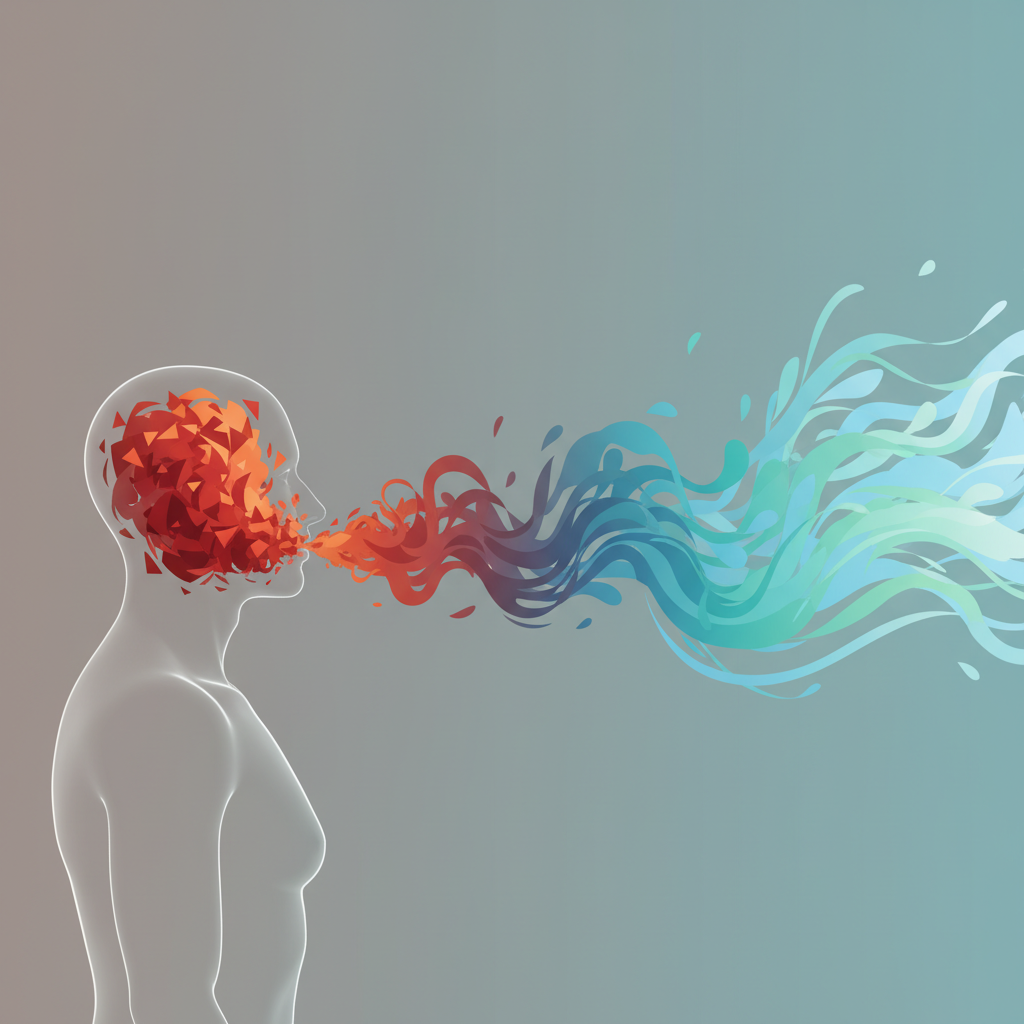 Evidence-based protocol 2026: 5-6 breaths per minute, 10-20 minutes daily minimum, for at least 4-6 weeks. Effect sizes now confirmed at Cohen's d = 1.44 in controlled trials. Slow breathing shows buffering effects against future stressors
Practical Implications for 2026
What This Means for You
If you have mild-to-moderate anxiety: Slow breathing is now a legitimate first-line option—not just a complement to "real" treatment.
If you're on medication: Adding slow breathing may enhance your treatment and potentially allow for lower doses (discuss with your doctor).
If you have severe anxiety: Breathing is helpful but likely not sufficient alone. The combination approach shows the best outcomes.
Evidence-Based Protocol (Updated)
Based on 2025-2026 research, an effective protocol includes:
Frequency: Daily practice (consistency matters more than duration) Duration: 10-20 minutes minimum (studies < 5 minutes showed weaker effects) Rate: 5-6 breaths per minute (resonance frequency) Technique: Any slow breathing method (cyclic sighing, 4-7-8, coherence breathing) Commitment: At least 4-6 weeks before evaluating effectiveness Format: Human-guided training outperforms app-only in studies
What to Track
Based on the research, monitor:
- Subjective anxiety levels (daily 1-10 scale)
- Sleep quality
- HRV if you have a wearable
- Response to stressors (does recovery feel faster?)
The Bigger Picture
A Shift in Medical Thinking
These studies represent a continuing shift in how medicine views breathing interventions:
2020: "Probably placebo" 2024: "Measurable, physiologically significant" 2026: "Evidence-based first-line option for mild-moderate anxiety"
This doesn't mean breathing replaces medication for everyone. It means breathing deserves equal consideration in treatment discussions.
Questions Being Actively Researched
- What predicts who responds well to breathing vs. medication?
- Can breathing interventions prevent anxiety from developing?
- What's the optimal combination of techniques for different anxiety subtypes?
- How do long-term outcomes (1+ years) compare?
- Does virtual/app-guided practice approach in-person effectiveness?
Conclusion
The 2025-2026 research strengthens the case for slow breathing as a legitimate intervention for anxiety:
The key findings:
- Effect sizes are now confirmed as medium-to-large (Cohen's d up to 1.44)
- 40+ RCTs support efficacy across stress, anxiety, and depression
- Effects persist beyond the practice session—providing stress "buffering"
- Mechanisms are increasingly understood (vagal, HRV, frontal asymmetry, interoception)
- Combined treatment (breathing + medication) shows best outcomes for moderate-severe cases
If you're managing anxiety in 2026, the science is clear: breathing deserves a central role in your approach—whether as a primary intervention or a powerful complement to other treatments.
Want to see how slow breathing affects your own nervous system? Safe-Flow tracks HRV and stress levels in real-time, helping you measure your personal response to breathing practices—adding your own data to the growing research story.
Join the Beta
Be among the first to experience Safe-Flow. Get early access + exclusive breathing guides.