Cold Exposure & Immunity: What the Latest Research Shows
"Cold showers boost your immune system" has become a common claim. Wim Hof has been injected with endotoxins on camera. Biohackers swear by ice baths for fewer sick days.
But what does the research actually show? Let's separate evidence from anecdote.
The Landmark Study: Radboud University (2014)
 The 2014 Radboud study proved humans can voluntarily influence their immune system—trained participants showed 50% less pro-inflammatory cytokines, 200% more anti-inflammatory IL-10, and 300% higher adrenaline than controls when injected with E. coli endotoxin
The study that started the modern cold exposure conversation.
What They Did
Researchers at Radboud University Medical Centre tested whether the Wim Hof Method could affect immune response:
Participants: 24 healthy young men
- 12 trained in Wim Hof Method (breathing + cold exposure + meditation)
- 12 untrained controls
The test: All participants were injected with E. coli endotoxin—a bacterial component that triggers immune response
Measured: Inflammatory markers, symptoms, cortisol, adrenaline
Key Results
| Marker | Trained Group | Control Group |
|---|---|---|
| Pro-inflammatory molecules (the ones that cause fever and fatigue) | ↓ 50% | Baseline |
| Anti-inflammatory molecules (the ones that calm inflammation) | ↑ 200% | Baseline |
| Adrenaline during breathing | ↑ 300% | Baseline |
| Flu-like symptoms | Minimal | Moderate-severe |
The trained group voluntarily activated their immune response and showed significantly less inflammation and fewer symptoms.
What This Means
The study proved that humans can voluntarily influence their innate immune system—previously thought impossible.
However, important caveats:
- The effect was short-term (during/immediately after breathing)
- Participants used both breathing AND cold—hard to separate effects
- This was immune modulation, not necessarily "boosting"
- The endotoxin was controlled; real infections are different
Follow-Up Studies: Building the Picture
Dutch "Common Cold" Study (2016)
Study: 3,000+ participants, randomized to cold shower vs. normal shower for 30-90 days
Finding: The cold shower group had 29% fewer sick days from work
But: No difference in actual illness duration when sick—they just came to work more often
Interpretation: Cold exposure might increase tolerance/resilience rather than preventing infection
Norepinephrine and Cold (Multiple Studies)
Cold exposure consistently elevates norepinephrine (also called noradrenaline) — a hormone and neurotransmitter that reduces inflammation and boosts alertness:
- Levels increase 200-300% with cold water immersion
- Effect occurs within minutes and persists for hours
- Norepinephrine has anti-inflammatory properties
- May explain the mood and energy boost people report after cold exposure
This is the most consistent finding across cold exposure research.
Inflammation Studies (2019-2024)
Recent research focuses on chronic inflammation:
Key findings:
- Regular cold exposure reduces baseline inflammation markers
- CRP (C-reactive protein — a blood marker doctors use to measure inflammation) decreases with consistent practice
- Effects similar to moderate-intensity exercise
- Most pronounced after 4-6 weeks of regular practice
Implication: Cold may help with chronic inflammatory conditions, not just acute immune response
What Cold Does to Immune Cells
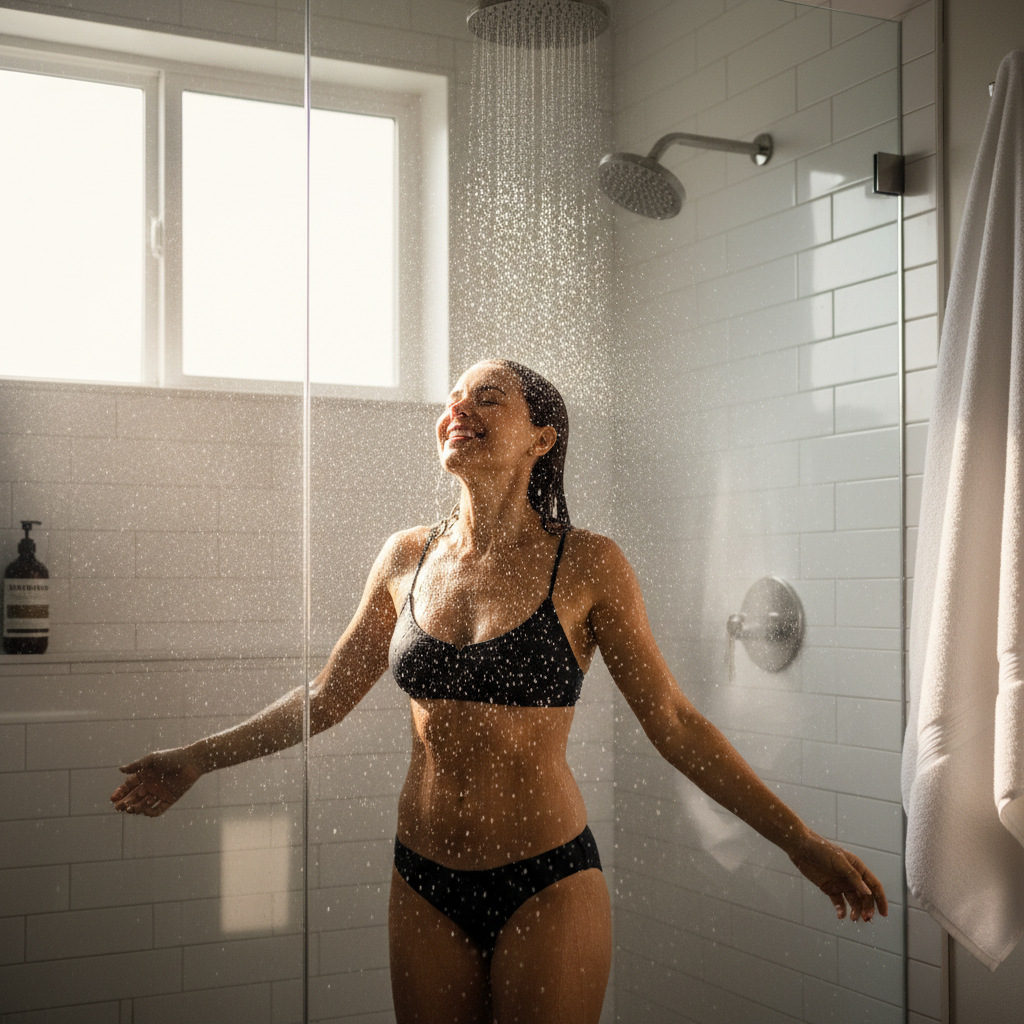 Cold immersion triggers immediate norepinephrine release (200-300% increase), boosting white blood cells and NK cell activity. Effects persist for hours—explaining the sustained energy and mood lift after cold exposure
Short-Term Effects
Immediately after cold exposure:
- White blood cell count increases
- Natural killer (NK) cell activity rises temporarily
- Neutrophil activity spikes
- Inflammatory cytokines shift toward anti-inflammatory balance
These changes last hours, not days.
Long-Term Adaptations
With regular practice (4+ weeks):
- Baseline immune cell profiles may shift
- Inflammatory response becomes more modulated (not necessarily suppressed)
- Stress hormone response to cold decreases
- Recovery from cold becomes faster
The Breathing Component
The Wim Hof studies combined cold with breathing. How much does each contribute?
Breathing Alone
The adrenaline surge in the Radboud study happened primarily during the breathing exercise, not the cold exposure.
Breathing effects:
- Adrenaline and cortisol spike during hyperventilation
- This temporarily suppresses pro-inflammatory pathways
- Effect is acute (minutes to hours)
- May "prime" the immune system before exposure
Cold Alone
Studies on cold exposure without breathing training show:
- Norepinephrine elevation (consistent)
- Modest immune cell changes (less dramatic than combined approach)
- Anti-inflammatory effects (over weeks)
Conclusion: Breathing and cold have synergistic effects. The combination appears more powerful than either alone.
What the Research Doesn't Say
Common Overclaims
"Cold exposure prevents colds and flu" Not proven. The evidence suggests resilience and tolerance, not prevention of infection.
"Ice baths cure autoimmune conditions" Highly speculative. While inflammation reduction is documented, autoimmune diseases are complex and shouldn't be self-treated.
"Cold exposure replaces vaccines" No. The immune modulation shown in studies doesn't create specific antibody protection.
"Daily cold showers guarantee immunity" Oversimplified. Effects depend on duration, temperature, consistency, and individual response.
Legitimate Questions
- What's the optimal temperature and duration?
- How does effect differ by age, sex, health status?
- Does cold exposure lose effect with adaptation?
- Can cold be harmful to certain immune conditions?
Practical Implications
 Minimum effective dose: 11 minutes per week total, at least 3 sessions, water around 15°C/59°F. Start with 30 seconds at shower end, progress to 2-5 minutes over weeks. Never practice breathing in water—4+ deaths documented
What We Can Reasonably Conclude
- Cold exposure elevates norepinephrine - consistent across studies
- Regular practice reduces inflammation markers - documented with CRP, cytokines
- Combined with breathing, immune modulation is possible - Radboud study
- Resilience may increase - fewer sick days, not necessarily fewer infections
- Effects are most pronounced with consistency - 4+ weeks of regular practice
What This Means for Practice
If you want immune benefits:
- Practice regularly (daily or every other day)
- Commit for at least 4-6 weeks
- Combine cold with breathwork
- Don't expect to never get sick
- Track your own sick days as personal data
Reasonable expectations:
- May feel more resilient when exposed to stress/illness
- May recover faster when sick
- May have fewer symptomatic days overall
- Will likely feel more energized daily
Temperature and Duration Guidelines
Based on available research:
Minimum Effective Dose
- Temperature: Cold enough to be uncomfortable (varies by individual)
- Duration: 11 minutes per week total (can be divided)
- Consistency: At least 3 sessions per week
Suggested Protocol
- Water temperature: 15°C / 59°F (cold tap water in most climates)
- Duration: 2-5 minutes per session
- Frequency: Daily or every other day
- Progression: Increase duration before decreasing temperature
Advanced (Ice Bath Level)
- Temperature: 0-10°C / 32-50°F
- Duration: 3-10 minutes
- Frequency: 2-3 times per week
- Caution: Monitor for hypothermia signs
Safety Considerations
Who Should Be Careful
- People with cardiovascular conditions
- Those with Raynaud's disease
- Pregnant individuals
- People on beta-blockers
- Anyone with cold urticaria (cold allergy)
Always
- Never practice alone (especially ice baths)
- Never hyperventilate in or near water
- Warm up actively after exposure
- Listen to your body's signals
- Consult a doctor if you have health conditions
The Bottom Line
Cold exposure appears to genuinely affect immune function—but not in the simplistic "boost" way often claimed.
What the evidence supports:
- Norepinephrine elevation → anti-inflammatory, energizing
- Acute immune cell activation → possible priming effect
- Chronic inflammation reduction → with consistent practice
- Combined with breathing → enhanced immune modulation
What remains unproven:
- Prevention of specific infections
- Treatment of autoimmune conditions
- Universal benefit for all populations
Cold exposure is a legitimate health practice with real physiological effects. It's also not magic. The research suggests meaningful benefits for inflammation and resilience—worth incorporating if you enjoy the practice and have no contraindications.
How to Integrate This Into Your Life
You've read the science. Here's how to put it into action without drowning (literally).
Week 1: First Contact
Your goal: End every shower with 30 seconds of cold water.
How to do it:
- Take your normal warm shower
- At the end, gradually lower the temperature
- Stay under cold water for 30 seconds
- Focus on long, slow exhales
- Get out and dry off actively (rub, move)
When: Morning is best (the energy lasts for hours)
What you'll feel: Discomfort, rapid breathing, urge to escape. That's normal. It passes.
Weeks 2-3: Increase the Dose
Your goal: 1-2 minutes of cold, controlled breathing.
Progression:
- Week 2: 1 minute
- Week 3: 1.5 to 2 minutes
New ritual: Before entering cold water, do 5 deep breaths (inhale 4 sec, exhale 6 sec). This prepares your nervous system.
Month 2+: The Established Routine
Your practice:
- 2-5 minutes of cold per session
- 4-5 sessions per week
- Optional: cold bath on weekends (10-15°C, 5-10 min)
Strategic moments:
- After exercise: speeds recovery
- After a stressful day: nervous system reset
- Morning: caffeine-free energy boost
How to Know If It's Working
Positive signs (after 2-4 weeks):
- You have more morning energy
- Your cold tolerance increases (less initial shock)
- You feel more mentally "awake"
- Your post-exercise recovery improves
To go deeper: Track your HRV (heart rate variability) before/after. Rising HRV = your nervous system is adapting well.
Common Mistakes That Lead to Quitting
- Starting too hard: 5 minutes of ice on day 1 = quitting on day 2
- Being inconsistent: Once a week isn't enough to create adaptation
- Holding your breath: Exhale slowly, don't block
- Passive rewarming: Move after cold, don't jump into a hot bath
Want to track how cold exposure affects your recovery and stress levels? Safe-Flow integrates with wearables to show you HRV changes over time, helping you measure the real impact of your cold practice on your nervous system.
Join the Beta
Be among the first to experience Safe-Flow. Get early access + exclusive breathing guides.