
James Nestor's "Breath": The Book That Changed Everything
When James Nestor's "Breath: The New Science of a Lost Art" hit shelves in 2020, it became an instant bestseller and sparked a global conversation about something we do 25,000 times a day without thinking. Here's what makes this book essential reading and how to apply its lessons.
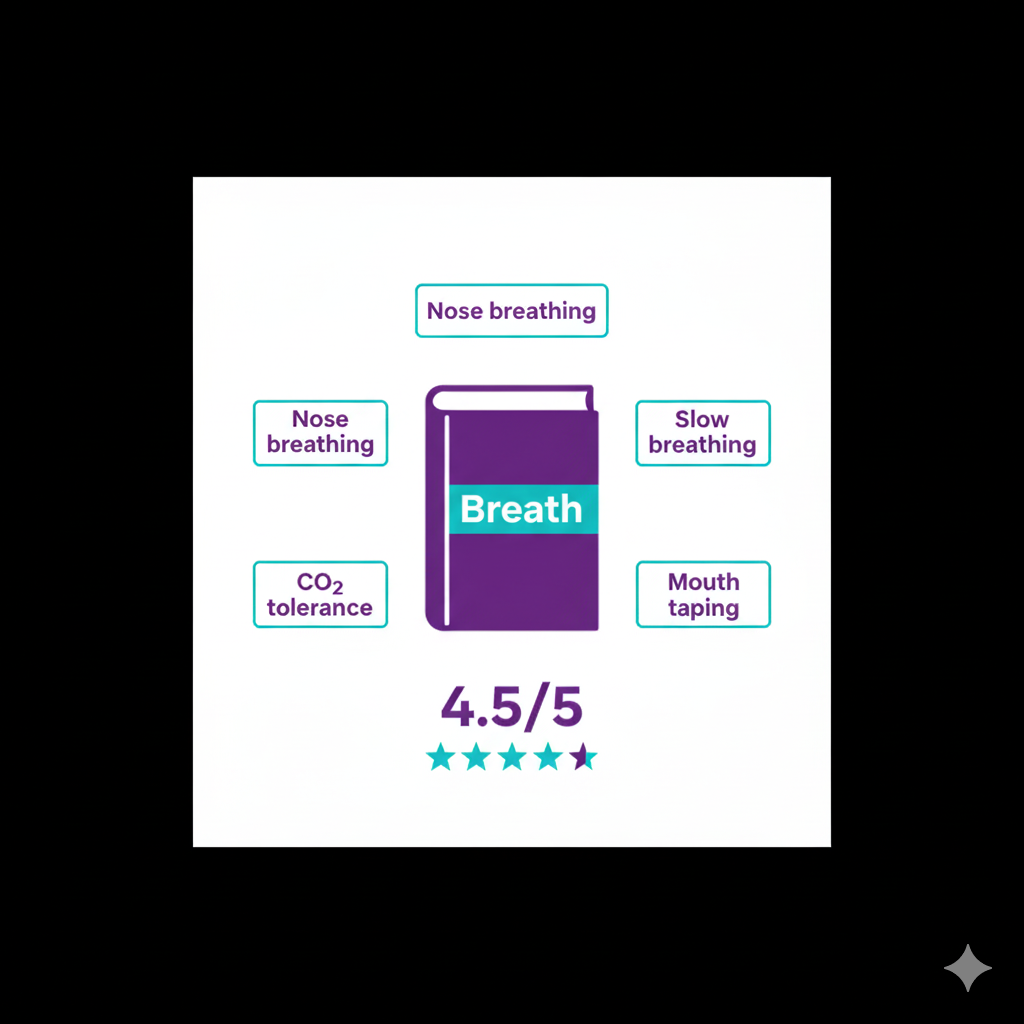 James Nestor's "Breath" book review header with key takeaways: nose breathing, slow breathing, CO2 tolerance, mouth taping
The Book at a Glance
Author: James Nestor, science journalist Published: 2020 Pages: 304 Key Thesis: Modern humans have forgotten how to breathe properly, and this is causing widespread health problems
The Stanford Experiment
The book opens with Nestor's participation in a Stanford study where he deliberately mouth-breathed for 10 days, then nose-breathed for 10 days. The results were striking:
Mouth Breathing Phase:
- Blood pressure increased by 13 points
- Heart rate variability dropped
- Snoring increased 4,820%
- Sleep apnea events appeared
- Cognitive performance declined
- Stress levels elevated
Nose Breathing Phase:
- All metrics returned to baseline or improved
- Snoring nearly eliminated
- Sleep quality dramatically improved
- Energy levels increased
This self-experiment sets the tone for the book: breathing isn't just important—it's foundational.
Key Concepts from the Book
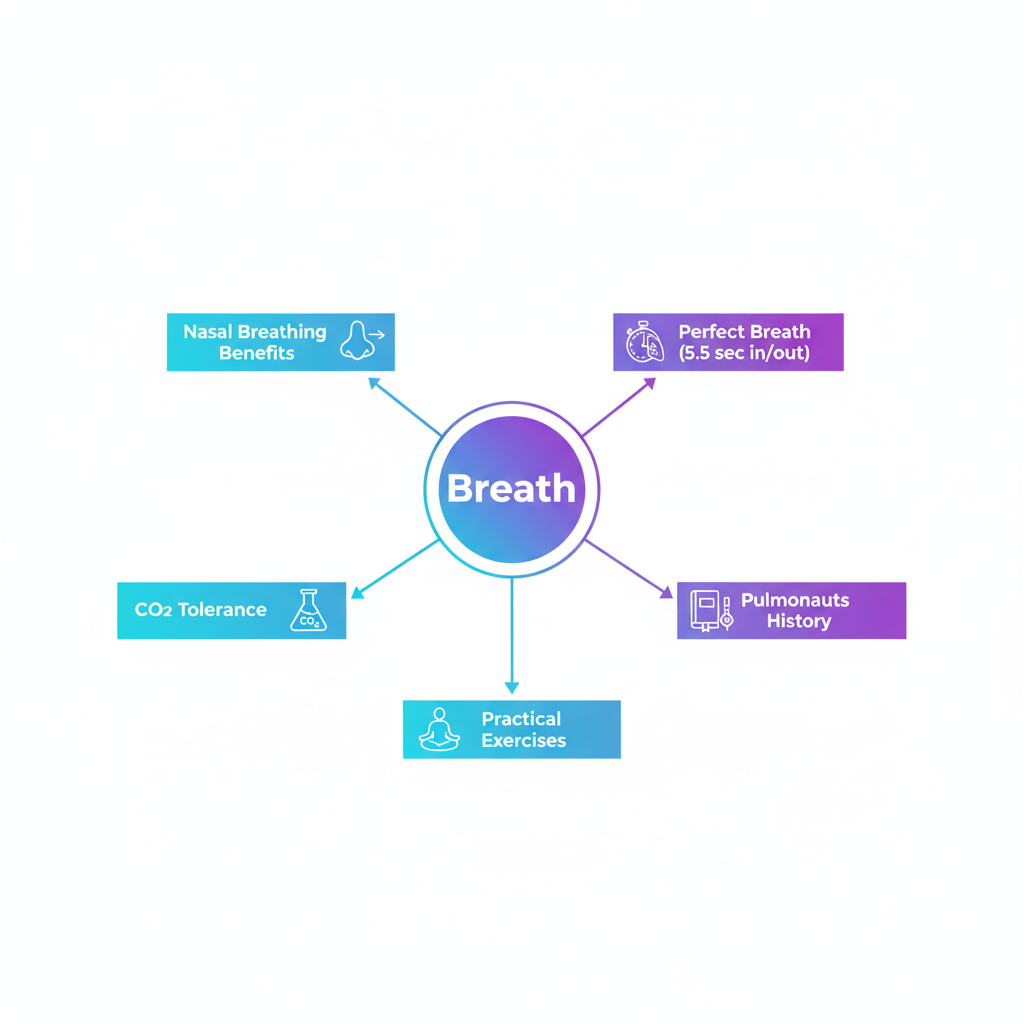 Mind map of Breath book key concepts: nasal breathing benefits, perfect breath (5.5 sec in/out), CO2 tolerance, Pulmonauts history, practical exercises
1. We've Devolved
Nestor presents evidence that human skulls have changed over the past few hundred years:
- Jaws have become smaller
- Airways have narrowed
- Crooked teeth became common
- Mouth breathing became normalized
The culprit? Soft, processed foods that don't require chewing, leading to underdeveloped jaw muscles and facial structures.
2. Nose Breathing Is Non-Negotiable
The nose is not just a passive air passage. It:
- Filters pathogens and particles
- Humidifies incoming air
- Warms air to body temperature
- Produces nitric oxide (a vasodilator)
- Regulates breathing rate
Nestor argues that mouth breathing should be reserved for emergencies and intense exercise—not everyday life.
3. Slow Down
Modern humans breathe too fast. The optimal rate, according to research Nestor cites:
- 5.5 seconds inhale
- 5.5 seconds exhale
- 5.5 breaths per minute
This "perfect breath" maximizes heart rate variability and oxygen delivery.
4. Exhale More
Many of us are "over-breathers"—taking in more air than we need. This leads to:
- CO2 depletion
- Reduced oxygen delivery (Bohr effect)
- Anxiety and stress
The solution: focus on complete exhales and don't rush to inhale.
5. Chew More
One of the book's more surprising recommendations: chewing hard foods (or gum) can help maintain jaw structure and airway health. Nestor even experiments with mastic gum for hours daily.
Practical Protocols from the Book
The Tape Test
Nestor famously mouth-taped during sleep throughout his research. Benefits reported:
- Reduced snoring
- Better sleep quality
- Improved morning energy
How to try it:
- Use surgical tape or specialized mouth tape
- Start with short periods while awake
- Ensure you can still breathe through nose
- Try for short naps before full nights
Breath Counting
A simple awareness exercise:
- Breathe normally for 1 minute
- Count your breaths
- Ideal: 5-8 breaths per minute
- If higher, consciously slow down
Extended Exhale Practice
From the "perfect breath" research:
- Inhale slowly for 5.5 seconds
- Exhale slowly for 5.5 seconds
- Practice for 5-10 minutes
- Aim for this to become your default pattern
Characters and Stories
One of the book's strengths is its storytelling. Memorable figures include:
Carl Stough - A choir conductor who taught emphysema patients to breathe better, achieving remarkable results that puzzled doctors.
Katharina Schroth - Developed breathing exercises for scoliosis patients that are still used today.
The Framingham Study - Lung capacity was found to be the greatest predictor of longevity—more than genetics, diet, or exercise.
The Buteyko Practitioners - Russian doctors who developed techniques for breathing less, not more.
Criticisms and Limitations
No book is perfect. Some valid criticisms:
-
Anecdotal evidence - Some claims rely heavily on individual stories rather than large studies
-
Self-experimentation - n=1 studies, while interesting, aren't scientifically rigorous
-
Oversimplification - Complex health conditions are sometimes attributed solely to breathing
-
Cherry-picking - Critics argue Nestor selects studies that support his thesis while ignoring contradictory evidence
Despite these limitations, the core message—pay attention to how you breathe—is well-supported by mainstream science.
How This Book Changed My Practice
Reading "Breath" led me to:
- Tape my mouth at night - Took getting used to, but improved sleep quality
- Check my breathing rate - I was averaging 12-15 breaths/minute; now closer to 6
- Prioritize nose breathing - Even during moderate exercise
- Practice daily breathwork - 10 minutes of slow breathing became non-negotiable
Who Should Read This Book?
Definitely read if you:
- Snore or have sleep issues
- Breathe through your mouth habitually
- Experience chronic stress or anxiety
- Are interested in the science of breathing
- Want practical health improvements
Maybe skip if you:
- Are looking for a quick how-to guide
- Don't enjoy narrative non-fiction
- Want peer-reviewed studies only
Key Quotes
"No matter what we eat, how much we exercise, how resilient our genes are, how skinny or young or wise we are—none of it will matter unless we're breathing correctly."
"The perfect breath is this: Breathe in for about 5.5 seconds, then exhale for 5.5 seconds. That's 5.5 breaths a minute for a total of about 5.5 liters of air."
"Nose breathing is far more efficient and works with our bodies' natural design."
The Bottom Line
Rating: 4.5/5
"Breath" isn't a peer-reviewed paper—it's a journalist's exploration of a fascinating subject. It's engaging, well-researched within its genre, and most importantly, it can genuinely improve your life if you apply its lessons.
The book's greatest contribution is making people aware of their breathing. That awareness alone is transformative.
Action Items After Reading
- Audit your breathing - Are you a mouth or nose breather?
- Count your breath rate - Is it above 10/minute?
- Try the 5.5-5.5 pattern - Can you maintain it?
- Consider mouth taping - Start with short tests
- Establish a daily practice - Even 5 minutes matters
Want to track how Nestor's breathing principles affect your health? Safe-Flow helps you build consistent breathwork habits and measure improvements through HRV and other biometrics.
Join the Beta
Be among the first to experience Safe-Flow. Get early access + exclusive breathing guides.